Introduction: The Stinky Problem & A Fermenting Solution
You lift the lid of your kitchen trash can, and there it is—the faint, sour smell of yesterday’s dinner scraps. A banana peel, some leftover rice, a few limp lettuce leaves. With a twinge of guilt, you toss in the coffee grounds from this morning and tie the bag, sending another batch of waste on a one-way trip to the landfill. It’s a daily ritual for many of us, a small, smelly problem we’ve learned to accept.
But what if you could flip the script on that waste? What if, instead of creating a stinky problem, your food scraps could become a powerful, nutrient-rich treasure for your plants?
Welcome to the world of Bokashi composting—a revolutionary, odor-free method that transforms all of your food waste, including meat, dairy, and bones, into potent plant food. This isn’t your average composting. It’s a simple, efficient fermentation process that happens in a sealed bucket under your sink, turning your trash into garden gold without the fuss, smell, or pests of traditional methods.
This guide is your first step. We’re going to walk you through everything you need to know, from the simple science behind the magic to the step-by-step process of turning your kitchen scraps into a gardener’s treasure. Get ready to say goodbye to the stinky problem and hello to a fermenting solution.
Chapter 1: What on Earth is Bokashi? (And Why You’ll Love It)
If the word “Bokashi” sounds unfamiliar, you’re not alone. But its simple, powerful concept is about to change how you see your trash basket. So, let’s demystify it.
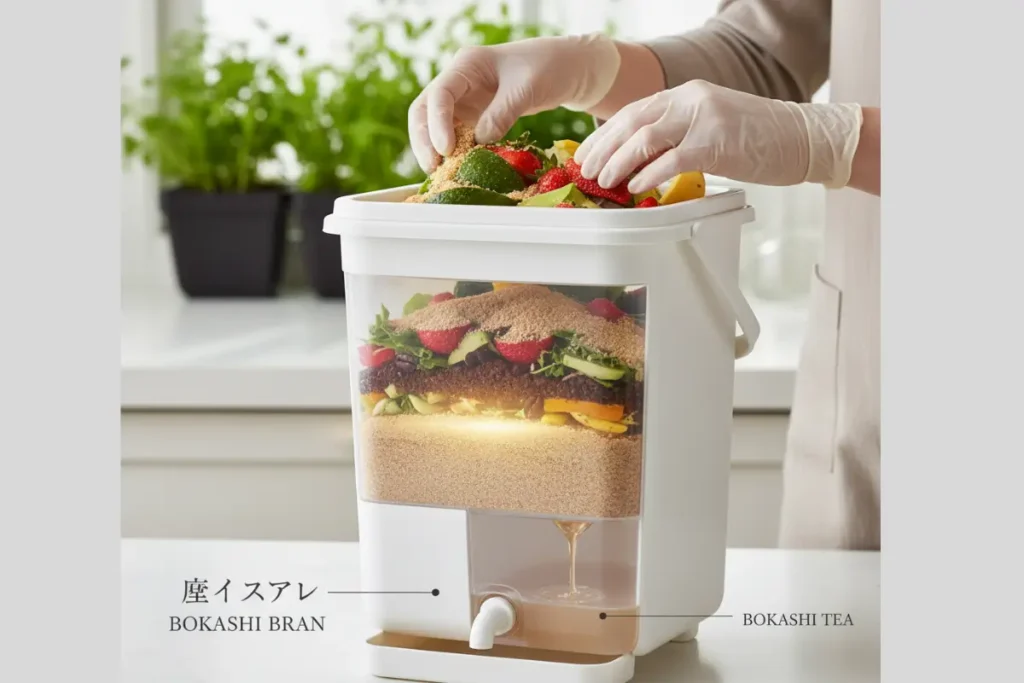
In its simplest form, Bokashi is a Japanese method of fermenting organic waste. Think of it like making pickles or yogurt for your garden. Instead of letting your food scraps rot, you inoculate them with a special mix of Beneficial Microorganisms (EM) found in what’s called Bokashi Bran. These microbes work to pickle and preserve the waste, pre-digesting it so your plants can easily absorb the nutrients later.
The Core Principle: Fermentation, Not Rotting
This is the most important concept to grasp, and it’s what makes Bokashi so unique. Traditional composting relies on decomposition—a slow, aerobic (oxygen-requiring) process that can get smelly and attract pests.
Bokashi, on the other hand, is a fermentation process. It’s anaerobic, meaning it happens in an airtight environment without oxygen. This is the magic key! By locking out air, we encourage the “good guys” (the Effective Microorganisms) to take over, creating a pickled environment that prevents the growth of foul-smelling, rot-causing bacteria.
The “Why”: Benefits at a Glance
Okay, the science is cool, but what’s in it for you? Here’s why you’re going to love switching to Bokashi:
- Compost (Almost) Everything: This is the game-changer. With Bokashi, you can process meat, dairy, bones, cooked food, and oily items—all the things that are big no-nos for a traditional compost bin. Finally, a solution for your entire plate!
- Speed & Space: A traditional compost pile can take months. A Bokashi bin typically takes just 2-4 weeks to ferment your waste. Plus, the system is compact and self-contained, making it perfect for small spaces like apartments, kitchens, and balconies.
- Odor-Free Operation: Remember, we’re pickling, not rotting. When you open a healthy Bokashi bin, you’re greeted by a pleasant, sour, pickled smell—not the stench of a garbage can. No more holding your breath while taking out the trash.
- A Nutrient Goldmine: The end product of the Bokashi process isn’t finished compost, but a powerful pre-compost. When you bury this in your garden or add it to a compost pile, it supercharges the soil with beneficial microbes and nutrients, acting like a vitamin shot for your plants.
In short, Bokashi isn’t just another way to deal with waste; it’s a cleaner, faster, and more powerful system that turns your biggest composting headaches into your garden’s greatest asset.
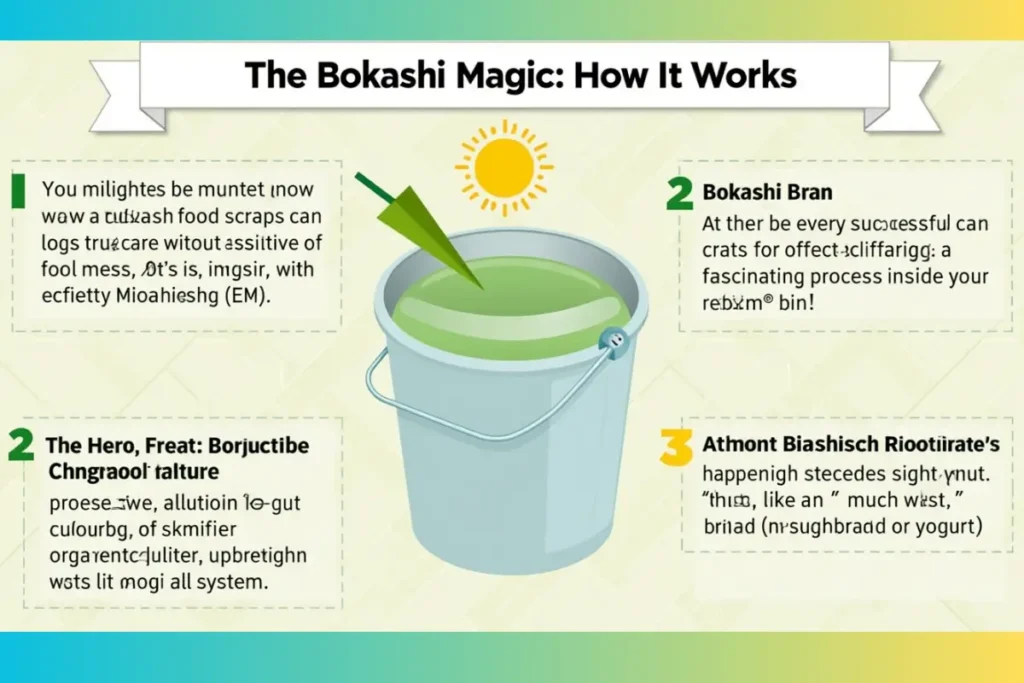
Chapter 2: The Bokashi Magic: How It Works
You might be wondering how a bucket of food scraps can transform without creating a foul mess. The secret isn’t magic—it’s microbiology! Let’s pull back the curtain on the simple yet fascinating process happening inside your Bokashi bin.
The Hero: Effective Microorganisms (EM)
At the heart of every successful Bokashi system is the Bokashi Bran, which is inoculated with a powerful culture known as Effective Microorganisms (EM). This is your “starter culture,” much like what you’d use for sourdough bread or yogurt.
This EM blend typically consists of three main types of beneficial microbes:
- Lactic Acid Bacteria: The true powerhouses. They work to ferment the sugars and carbohydrates in your food waste, producing lactic acid.
- Yeasts: These organisms contribute to the fermentation process and produce compounds that suppress harmful bacteria and odors.
- Photosynthetic Bacteria: These support the other microbes and help break down organic matter.
So, how do they work? When you sprinkle the bran onto your food scraps, these microbes spring into action. The lactic acid bacteria rapidly lower the pH of the environment, making it highly acidic. This acidic environment “pickles” the waste, effectively preserving it and creating conditions where putrefying (rot-causing) bacteria cannot survive. The waste doesn’t decompose; it ferments and pre-digests, making its nutrients readily available for plants later on.
The Byproduct: Bokashi Tea
As the fermentation process kicks in, you’ll notice a liquid accumulating at the bottom of your bin. This isn’t waste; it’s a valuable byproduct called Bokashi Tea (or leachate).
This nutrient-rich liquid is drained off through the spigot and is a testament to the active work of the microbes. It’s filled with the nutrients and beneficial organisms being released from the fermenting waste.
A quick word of caution: This liquid is very potent! It should always be diluted (about 1:100 with water) before using it as a fertilizer. Alternatively, it’s fantastic poured undiluted down household drains to keep them clean and odor-free, as the beneficial microbes help break down organic matter in your pipes.
A Simple Analogy: Think Pickling!
If the science still seems complex, here’s a perfect analogy: Bokashi is essentially pickling your garbage.
When you pickle cucumbers to make pickles, you submerge them in a salty, acidic brine (vinegar). This brine creates an environment where the bad bacteria that cause spoilage can’t grow, while the good lactic acid bacteria preserve the vegetable.
In Bokashi composting, the Bokashi bran is your “brine mix.” It creates an acidic, anaerobic environment inside the bucket that preserves your food scraps and encourages the good microbes to work, while the bad, smelly bacteria are shut out. You’re not letting your waste rot; you’re actively preserving and pre-digesting it on a microbial level.
In the next chapter, we’ll get practical and look at exactly what you need to start this amazing process in your own home.
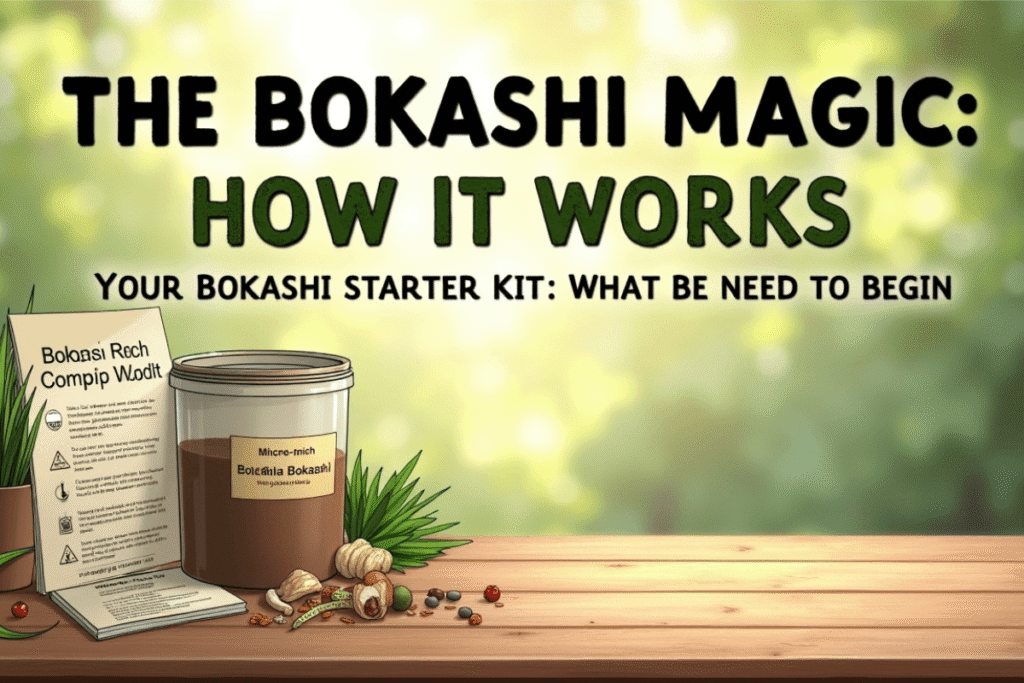
Chapter 3: Your Bokashi Starter Kit: What You Need to Begin
The best part about Bokashi composting is that you don’t need a garden shed full of equipment. With just a few key items, you can set up your own indoor composting system and start transforming your kitchen waste today. Let’s build your starter kit.
Essential Equipment
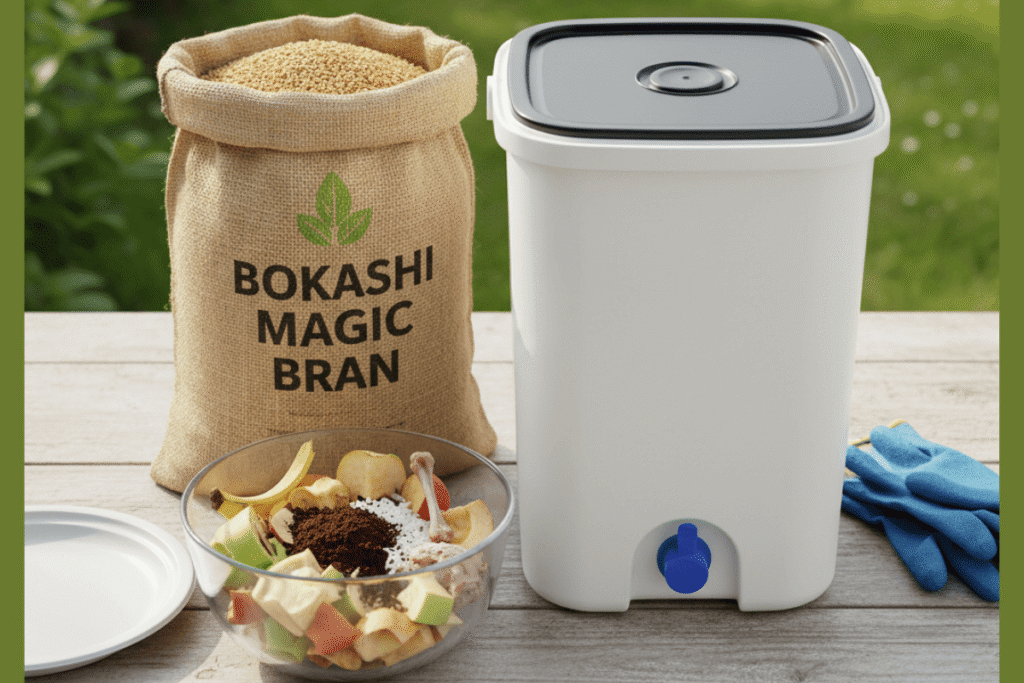
- Two Bokashi Bins: The Secret to a Continuous Supply While you can start with one, a two-bin system is highly recommended. Here’s why: Once a bin is full, it needs to sit sealed for about two weeks to complete its fermentation. If you only have one bin, what do you do with your food scraps during that time? A second bin allows you to keep collecting waste without interruption, creating a seamless, continuous cycle. One bin is always fermenting while the other is in active use.
- Bokashi Bran: The Catalyst for Magic This is the non-negotiable ingredient that makes the entire process work. The bran is wheat or rice bran that has been inoculated with the Effective Microorganisms (EM). You can easily purchase it online, at garden centers, or from specialty eco-stores. For the ambitious DIY-er, it is possible to make your own bran, but this is an advanced topic as it requires a starter culture and precise conditions; for now, we recommend starting with a pre-made bag to ensure success.
- Simple Tools: For an Easy Process
- A Pressing Tool: You need something to compact the waste and push out air pockets after each addition. A plate that fits inside the bin, a sturdy jar, or even your (clean) fists work perfectly.
- A Draining Container: You’ll need a small cup or bowl to collect the nutrient-rich Bokashi Tea when you drain the bin from the spigot.
The “What Can I Feed It?” List
One of Bokashi’s biggest advantages is its versatility, but a few guidelines will keep your system healthy and efficient.
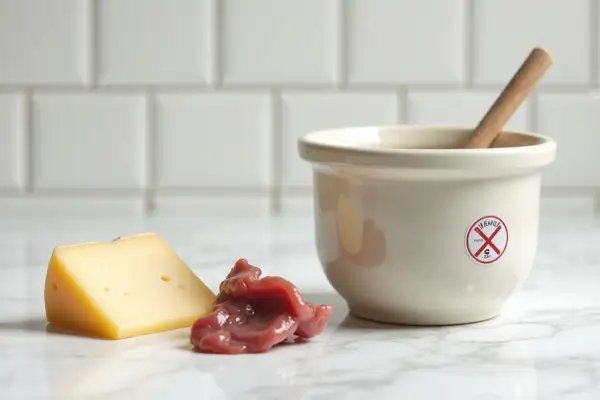
YES! (The All-Stars) Feel free to add almost any food scrap from your kitchen:
- Fruit and Vegetable Scraps: Cores, peels, stems, and spoiled produce.
- Cooked Food: Leftover rice, pasta, soups, and vegetables.
- Meat and Fish: Scraps, bones, and skin.
- Dairy Products: Cheese rinds, yogurt, and milk.
- Eggshells, Coffee Grounds, and Tea Bags (including paper tags).
- Bread and Grains.
NO! (The Party Poopers) A few items can disrupt the fermentation, so it’s best to leave them out:
- Extremely Large Bones: They take too long to break down.
- Excessive Liquids: Soups, oils, and fats in large quantities can create a slimy environment and should be avoided (a little bit is okay).
- Moldy/Rotten Food: If it’s already decomposing with its own bad mold, it can introduce the wrong kind of microbes.
- Non-Organic Materials: Obviously, no plastic, metal, glass, or paper products.
With your kit assembled and your “yes” and “no” lists in mind, you’re ready to start the hands-on process. In the next chapter, we’ll walk through the simple steps, layer by layer.
Chapter 4: The Step-by-Step Bokashi Process: From Scrap to Super-Soil
Now for the fun part—the hands-on magic! The Bokashi process is a simple, rhythmic cycle that quickly becomes a seamless part of your kitchen routine. Follow these six easy steps, and you’ll be a pro in no time.
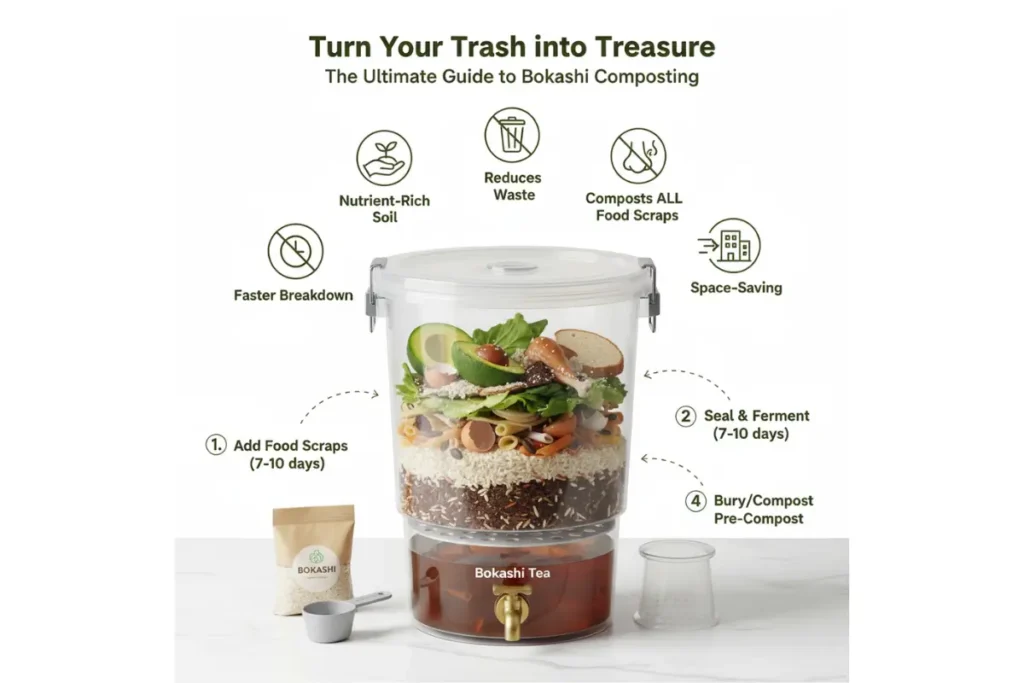
Step 1: Collect & Chop Keep a small, lidded container on your countertop to collect food scraps throughout the day. As you add items, a quick tip is to chop or break up larger pieces (like a cabbage core or a melon rind). Increasing the surface area gives the Bokashi bran more places to work, leading to faster and more efficient fermentation.
Step 2: Layer & Sprinkle Once or twice a day, take your collected scraps and add them to your Bokashi bin, creating a layer that’s an inch or two thick. The key next step is to sprinkle a generous handful of Bokashi bran over the new layer of waste. Think of this as inoculating the scraps with the beneficial microbes that will do all the hard work. Ensure the bran is evenly distributed to cover as much of the surface as possible.
Step 3: Press & Squeeze This is the most critical step for success! After adding your scraps and bran, use a plate, a pot lid, or a dedicated presser to firmly compress the waste down. You are pushing out as much air as possible to create the anaerobic (oxygen-free) environment that the Effective Microorganisms need to thrive. A good push also helps release some of the moisture that will become your Bokashi Tea.
Step 4: Drain the “Tea” Every two to three days, or even daily if you’re adding very juicy scraps, remember to drain the liquid from the spigot at the bottom. This “Bokashi Tea” is potent! Dilute it with water (about 1:100) to fertilize your plants, or pour the undiluted liquid down drains to keep them clean and odor-free. Letting this liquid build up can submerge the waste and risk creating a foul smell.
Step 5: Repeat & Fill Simply repeat steps 1 through 4. Continue layering your scraps, sprinkling bran, pressing, and draining until the bin is completely full. You’ll know it’s full when you can’t press the waste down any further without it touching the lid.
Step 6: Seal & Ferment Once the bin is full, add one final, generous sprinkling of Bokashi bran on top. Seal the lid tightly to make it airtight. Now, let the bin sit undisturbed at room temperature for 14 days (two weeks). This is the fermentation period where the microbes work their magic. During this time, you can start filling your second bin, ensuring a continuous cycle.
After these two weeks, your fermented waste is ready to be “harvested.” It won’t look like soil; it will look like pickled waste. In the next chapter, we’ll explore the exciting final step: how to turn this pre-compost into a powerful super-soil for your garden!
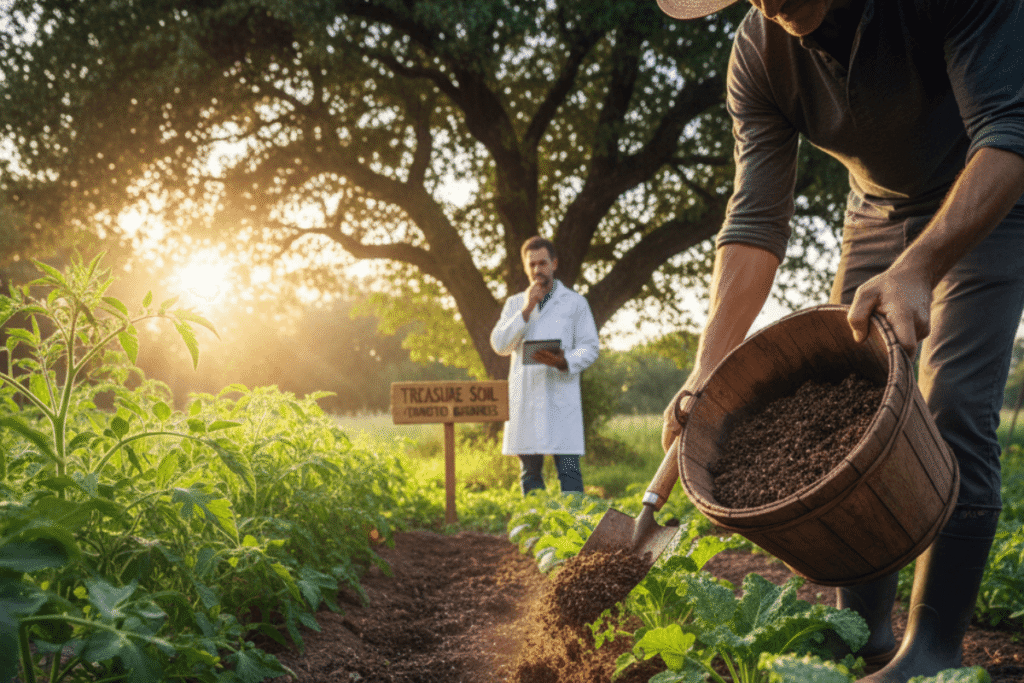
Chapter 5: Harvesting Your Treasure: What to Do with Fermented Waste
After its two-week fermentation, the contents of your Bokashi bin are ready for their final transformation. This is not finished compost, but a powerful, pre-digested “pre-compost” teeming with beneficial microbes. It’s now primed to be integrated into the soil, where it will quickly break down into a rich, plant-ready humus. Here are the best ways to use your fermented treasure.
Option 1: Bury it in the Garden (The Most Common Method)
This is the most effective and popular method for those with outdoor space.
- How to Bury It: Dig a trench about 12-15 inches deep in a fallow garden bed, or simply dig holes between your existing plants. Empty the entire contents of your Bokashi bin into the trench or hole, then cover it immediately with at least 8-10 inches of soil. The soil acts as a filter and provides the final ecosystem for the pre-compost to finish breaking down.
- Timeline: The buried waste will integrate into the soil remarkably fast. You’ll see it become unrecognizable within 2 to 4 weeks. You can plant new seedlings in that spot after just two weeks, but wait 3-4 weeks before planting directly into the trench to ensure the initial acidity has neutralized.
Option 2: Add it to a Compost Pile (Turbocharge It!)
If you have a traditional compost bin or pile, Bokashi waste is the ultimate accelerator.
- How to Do It: Simply bury your fermented waste deep within the center of your existing compost pile. The powerful microbes from the Bokashi will inoculate the entire pile, speeding up the decomposition of all the other materials and virtually eliminating odors. It’s like giving your compost a potent probiotic shot!
Option 3: Create a “Compost Grave” (For Apartments)
No garden? No problem! You can process your Bokashi waste in a container, often called a “soil factory” or “compost grave.”
- How to Do It: Get a large planter or storage tote and fill the bottom with a few inches of potting soil or existing compost. Empty your fermented Bokashi bin into this container and cover it completely with another 6-8 inch layer of soil. Seal the container with a lid (poke a few small air holes) and let it sit for 3-4 weeks. The waste will break down into a beautiful, rich soil that you can use for your potted plants.
Don’t Forget the Bokashi Tea!
While your solid waste is transforming, remember the liquid byproduct you’ve been diligently draining.
- As a Fertilizer: Dilute the tea at a ratio of roughly 1:100 (one part tea to one hundred parts water). It should look like weak tea. Use this to water your plants for a powerful nutrient boost.
- As a Drain Cleaner: Pour undiluted Bokashi Tea directly down sink or shower drains once a week. The beneficial microbes will help break down organic matter and keep your pipes clean and odor-free.
⚠️ Important Warning: Bokashi Tea is very acidic and potent. Never use it undiluted on plants, as it will “burn” them and harm the roots. Always dilute it heavily before using it as a fertilizer.
Chapter 6: Troubleshooting: Common Bokashi Questions & Problems
Even with the best intentions, you might run into a question or two. Don’t worry—most issues have simple explanations and solutions. Here’s a handy guide to troubleshooting your Bokashi bin.
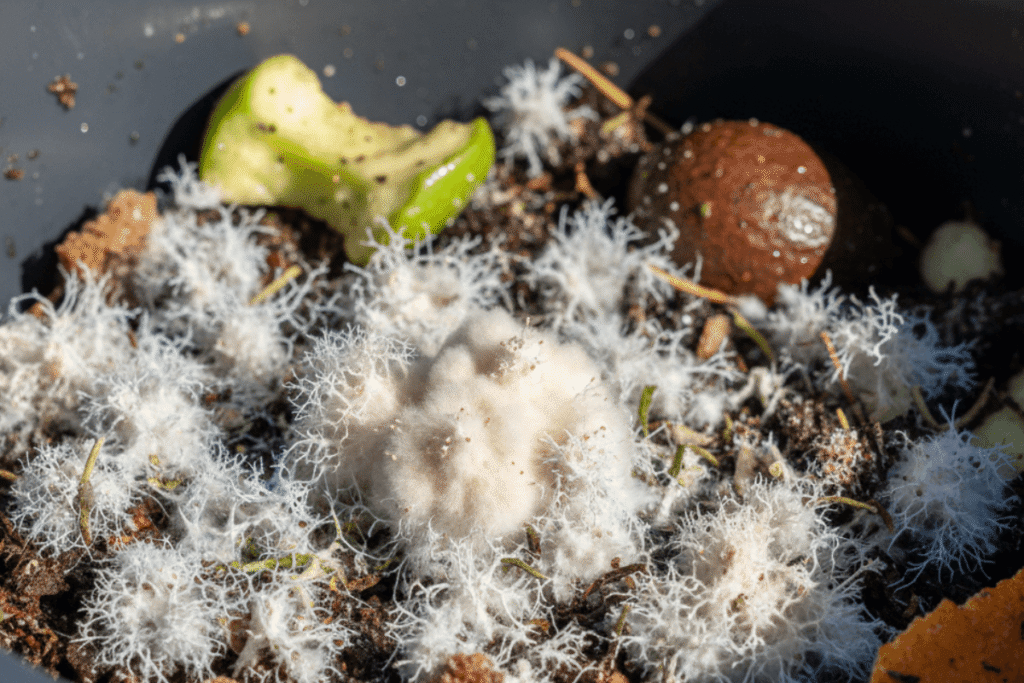
Problem: White Mold on Top
- What you see: A fluffy white coating or patches on the surface of your waste.
- Solution: Celebrate! This is good! White mold is a clear sign of successful, healthy fermentation. It’s a beneficial fungus that is part of the process. Simply seal the lid and let the bin continue its two-week fermentation period.
Problem: Green or Black Mold
- What you see: Spots of green, blue, or fuzzy black mold.
- Solution: This is bad. This indicates that unwanted, rotting-causing molds have taken hold. The most common causes are exposure to air (a leaky lid or not pressing out air pockets), using contaminated/waste that was already rotten, or not using enough Bokashi bran.
- What to do: Carefully scoop out the visibly moldy section and a bit of the surrounding waste. Add an extra-thick layer of fresh Bokashi bran over the entire surface, press down firmly, and reseal the lid. If the problem persists throughout the bin, it’s safest to dispose of the batch and start over.
Problem: Foul Smell (Like Rotten Eggs or Putrid Garbage)
- What you smell: A strong, offensive, rotten odor when you open the bin.
- Solution: The anaerobic process has failed, and rotting has begun. This is typically caused by one of three things:
- Not enough Bokashi bran. (Solution: Be more generous with your sprinkling!)
- The bin is too wet. (Solution: You may not be draining the tea frequently enough, or you’re adding overly wet scraps. Drain the liquid more often.)
- Air pockets are present. (Solution: Press down much more firmly each time you add scraps to eliminate oxygen.)
- What to do: Try adding a very thick layer of new bran, pressing down thoroughly, and draining any liquid. If the smell doesn’t improve within a few days, the batch is likely lost and should be discarded.
Problem: No Liquid is Draining
- What you see: You open the spigot, but little or no “Bokashi Tea” comes out.
- Solution: Don’t panic! This is a common issue. First, check if the spigot is blocked by pushing a thin wire or pipe cleaner through it. If it’s clear, your batch of waste might just be naturally dry (e.g., lots of bread and dry vegetable peels). This isn’t necessarily a problem. The fermentation will still proceed, but you may need to press down even more firmly to release moisture.
Conclusion: Your Trash is Now Treasure
And there you have it—the complete journey from stinky kitchen trash to garden treasure. You’ve seen how a simple bucket and some magical bran can transform your food scraps, all of them, into a powerful, nutrient-rich resource. No more guilt, no more foul odors, just the satisfaction of turning waste into wealth for your plants. You are no longer just taking out the trash; you are harvesting a valuable ingredient for a healthier garden.
But the impact of this simple act stretches far beyond your own kitchen. Every bucket of waste you ferment is a bucket that doesn’t end up in a landfill, where it would decompose without oxygen and release methane, a potent greenhouse gas. By embracing Bokashi, you are actively reducing your carbon footprint and closing the loop right in your own home. You’re moving from a linear system of “take-make-waste” to a circular one where your waste becomes the foundation for new growth. That is a powerful and personal environmental win.