Introduction: The Urban Gardener’s Dilemma
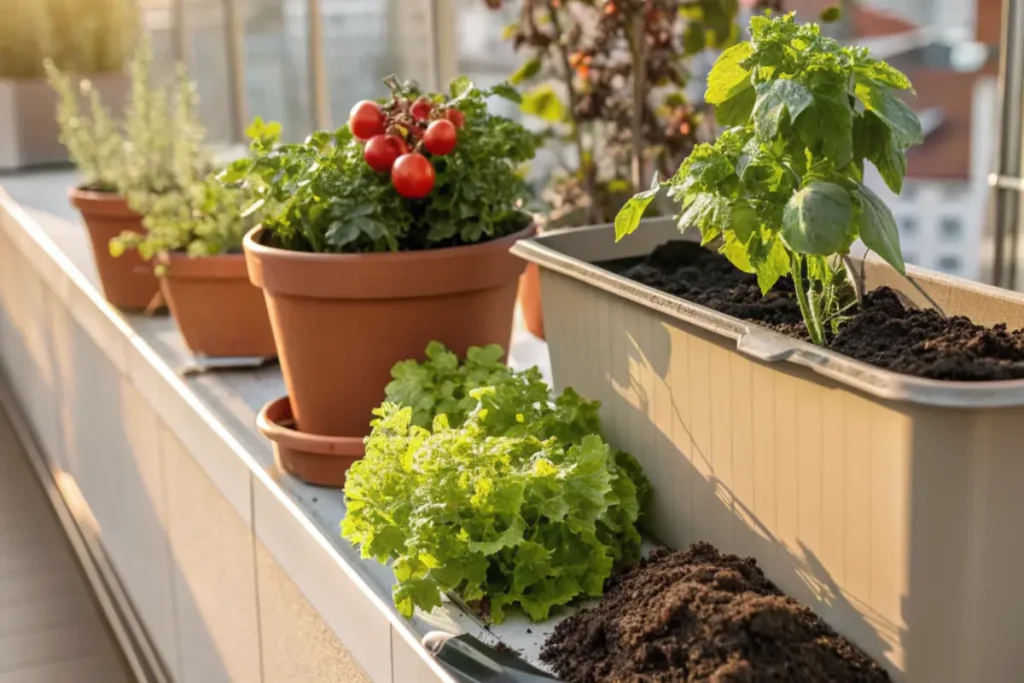
You’ve seen the dream in magazines and on social media: a lush, overflowing garden, heavy with sun-ripened tomatoes, crisp cucumbers, and fragrant herbs. You want that. You crave the satisfaction of growing your own food. But your reality is a sunny balcony, a modest patio, or a single windowsill. You’re not alone. Millions of us are redefining what it means to have a garden, squeezing every bit of potential from our compact urban jungles.
You start with enthusiasm, filling pots with fresh potting soil and tender seedlings. For a while, everything thrives. But then, it happens. The growth slows. The vibrant green leaves fade to a pale yellow. Your basil plant becomes leggy, and your pepper flower buds drop without fruiting. This is the urban gardener’s dilemma: container plants are heavy feeders. Confined to a finite amount of soil, they rapidly devour the available nutrients with every watering, leaving the potting mix depleted, exhausted, and essentially… dead.
The common solution? A shelf full of store-bought liquid fertilizers and soil amendments. It can feel like a chemical chore, and it certainly adds up at the checkout. But what if there was a better way? A way that was natural, cost-effective, and transformed your kitchen scraps into a powerful, plant-reviving elixir?
That secret weapon is composting. And before you picture a sprawling, smelly pile in a backyard corner, think again. Composting has had a modern, space-efficient makeover. It’s no longer just for those with acres of land; it’s for anyone with a countertop and a dream.
This guide will show you exactly how to harness the power of composting, even in the smallest of spaces, to create a thriving, productive container garden that yields an impressive harvest. Get ready to turn your scraps into super-soil and your small space into a high-yield oasis.
I. Why Your Container Garden is STARVING for Compost
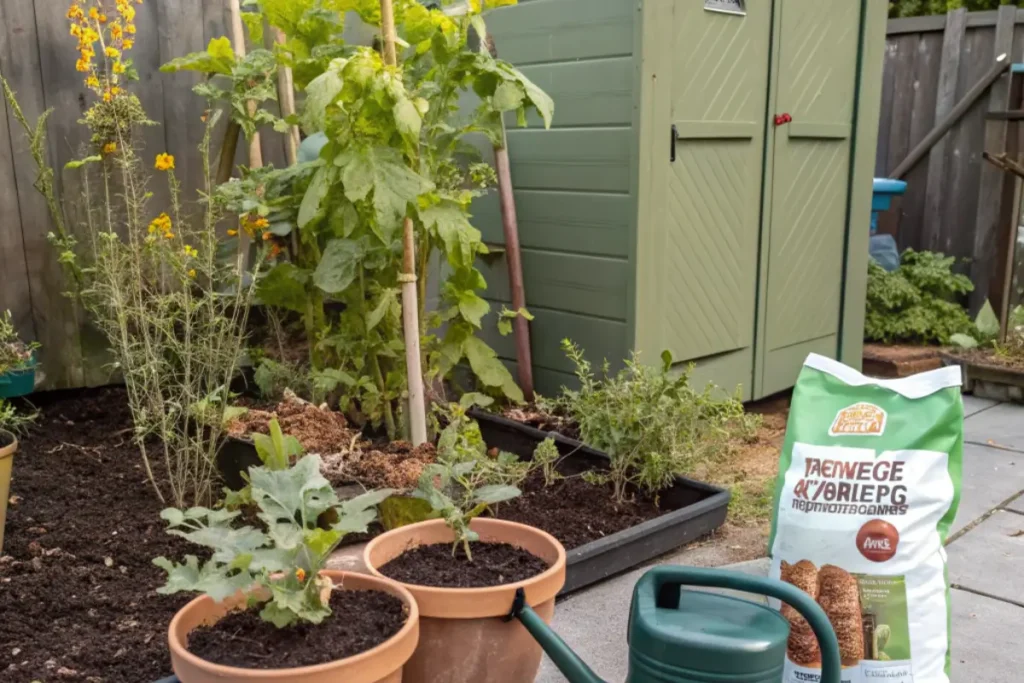
Think of your container garden as a gourmet restaurant for plants. When you first fill a pot with fresh potting mix, it’s like opening with a fully stocked kitchen. But with every watering and every new leaf, your plants are placing orders for essential nutrients like nitrogen, phosphorus, and potassium. In the confined space of a container, there’s no underground supply chain to restock the pantry. This is the Nutrient Drain: plants quickly consume what’s available, and frequent watering washes the remaining soluble nutrients right out of the drainage holes. Unlike in-ground gardening, where roots can spread far and wide to seek out new food sources, your container plants are trapped, entirely dependent on the finite resources you provide.
This leads directly to a grim reality for any small-space gardener: The “Dead Dirt” Cycle. After a season or two, that once-fluffy potting mix transforms. It becomes compacted, dense, and hydrophobic—shedding water instead of absorbing it. This isn’t just “old soil”; it’s a lifeless medium. The organic matter that gave it structure and vitality has been consumed. Without this crucial component, roots struggle to breathe and expand, leading to stunted, stressed, and weak plants that are far more susceptible to pests and diseases. You’re essentially asking your plants to thrive in a barren wasteland.
This is where compost enters the scene, not as a mere fertilizer, but as the Ultimate Superfood that solves all these problems at once.
- Slow-Release Nutrients: Unlike synthetic fertilizers that deliver a harsh, immediate jolt of nutrients (often leading to weak, leggy growth), compost is the master of the slow feed. It provides a balanced, gentle, and continuous supply of nutrients, exactly as nature intended. This means your plants get a consistent meal throughout their growing season, leading to strong, sustained growth and bountiful yields.
- Soil Structure Superhero: Compost is a miracle worker for physical soil health. Mixed into your container, its organic particles bind together, creating tiny pockets of air that improve aeration and allow roots to breathe easily. Simultaneously, these particles act like microscopic sponges, dramatically improving moisture retention. This means water is held available to plant roots for longer, reducing your watering frequency and preventing drought stress. It transforms dead, compacted dirt back into a living, breathing, crumbly soil.
- Microbe Magic: This is perhaps compost’s most powerful, yet invisible, superpower. Compost is teeming with billions of beneficial bacteria, fungi, and other microorganisms. When you add compost, you’re not just adding dirt; you’re inoculating your container with a thriving ecosystem. These microbes break down organic matter into plant-available nutrients, form symbiotic relationships with roots to help them uptake more water and food, and even help suppress soil-borne diseases by outcompeting harmful pathogens. You are building a healthy immune system for your garden from the ground up.
By understanding this cycle of depletion and renewal, it becomes clear: compost isn’t just an optional supplement for your containers—it’s the fundamental ingredient for their long-term health and productivity.
II. Small-Space Composting: No Backyard? No Problem!
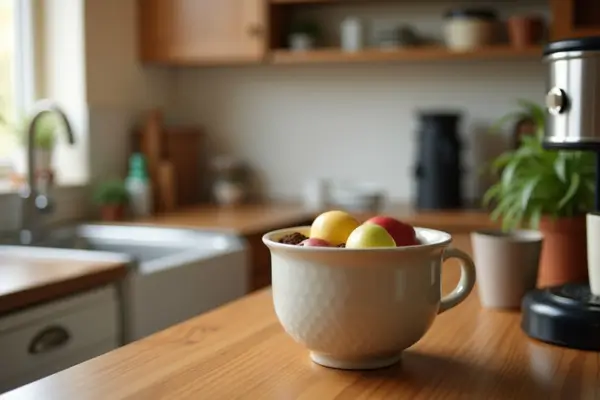
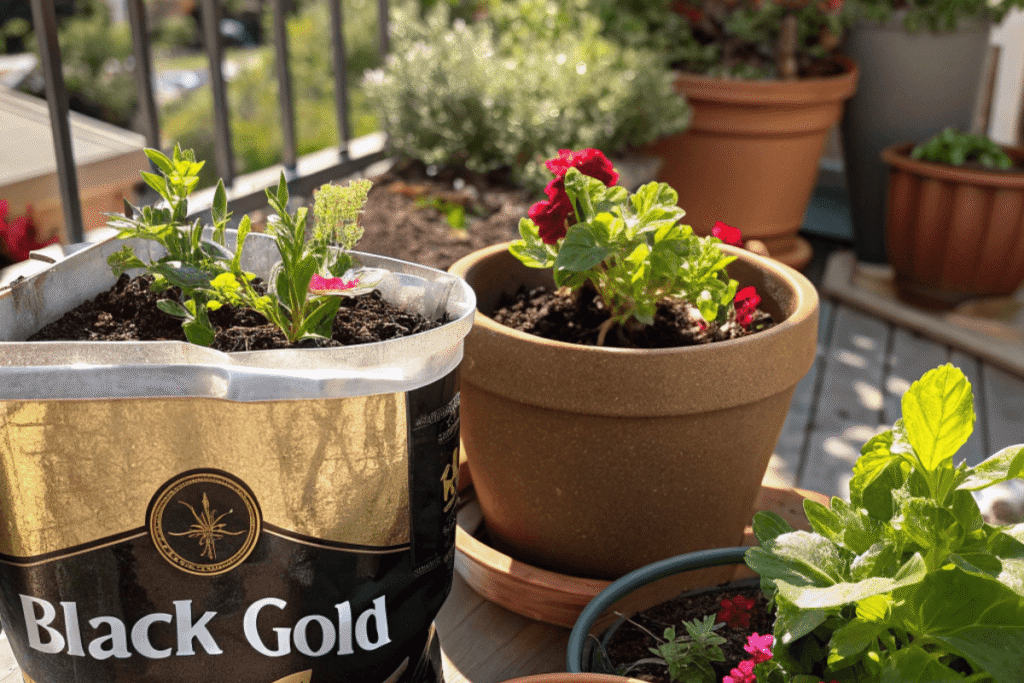
Let’s tackle the biggest myth about composting head-on: the idea that it’s a big, smelly, fly-ridden process that belongs on a rural farm. Nothing could be further from the truth! Modern small-scale composting is clean, efficient, and surprisingly sleek. With the right method, you can turn your kitchen scraps into “black gold” right under your kitchen counter or on your balcony, with no unpleasant odors. If you can manage a small trash can, you can manage a compost bin.
Here are the top methods tailored for every micro-space:
The Electric Composter: The Ultimate Tech Solution
- How it Works: These countertop appliances use heat, abrasion, and aeration to dehydrate and grind your food scraps into a nutrient-rich soil amendment in as little as a few hours. You simply add your scraps, press a button, and let the machine work its magic.
- Best For: Apartment dwellers and busy individuals who want speed, convenience, and a completely odor-free process. It’s the “set it and forget it” of composting.
- Bonus: It significantly reduces the volume of your food waste, cutting down on trash bag usage and trips to the compost chute.
The Bokashi Bucket: Ferment Your Way to Fertility
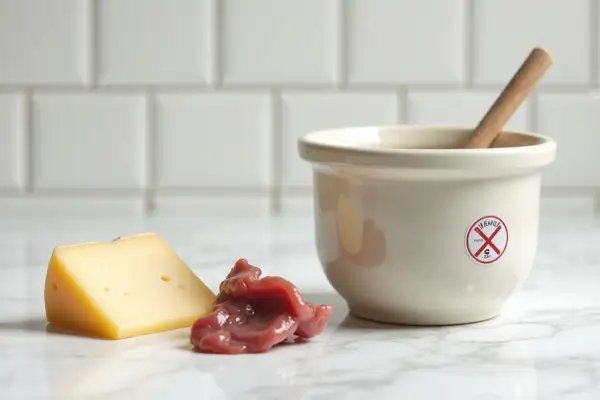
- How it Works: This Japanese method is less about traditional decomposition and more about fermentation. You add all your food scraps—including meat, dairy, and cooked foods that you can’t put in other composters—to a special airtight bucket and sprinkle them with a Bokashi bran inoculant. The bran contains beneficial microbes that pickle the waste, preventing rot and odor.
- Best For: Those who want to compost everything and have a second step for the fermented waste (it needs to be buried in soil or a compost bin to finish breaking down). It’s incredibly compact and, when sealed properly, is completely odorless.
Worm Bin (Vermicomposting): Harness Nature’s Powerhouses
- How it Works: You house a colony of special red wiggler worms in a ventilated, multi-tiered bin. These worms are eating machines, consuming their weight in organic scraps daily and producing two incredibly valuable products: worm castings (a super-potent fertilizer) and “worm tea” (a nutrient-rich liquid).
- Best For: Gardeners looking for the highest-quality compost and fertilizer. A properly maintained worm bin is odor-free and can be kept in a closet, under the sink, or in a garage. It’s a living ecosystem that’s both fascinating and highly productive.
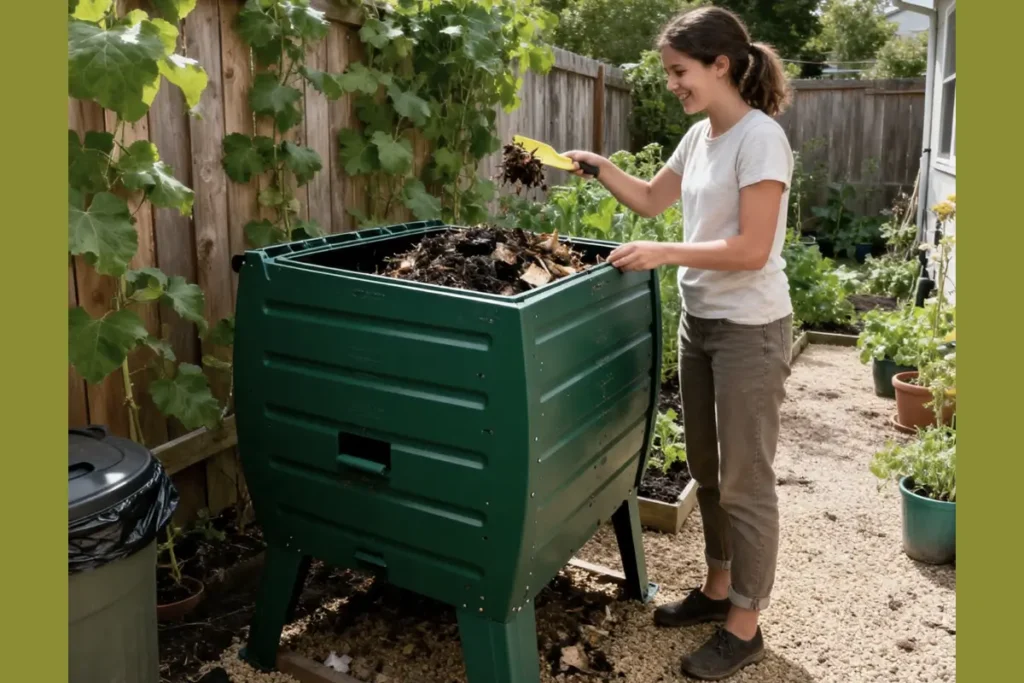
The Tumbling Composter: For the Balcony or Patio Gardener
- How it Works: This is a scaled-down version of traditional composting, contained within a barrel that rotates on a frame. The enclosed design retains heat to speed up decomposition and makes turning your compost as easy as giving it a few spins. This aeration is key to fast, odor-free composting.
- Best For: Anyone with a small outdoor space like a balcony, patio, or corner of a deck. It’s perfect for handling larger volumes of yard waste (like fallen leaves) along with kitchen scraps, and it keeps the process neat and tidy, safe from pests.
No matter your living situation, one of these methods is the perfect key to unlocking a continuous supply of free, powerful fertilizer for your container garden.
III. The “How-To”: Integrating Compost into Your Container Garden
Now for the fun part—putting your “black gold” to work! Using compost in your container garden is simple, but a few key techniques will ensure your plants get the maximum benefit. Here’s how to transform your homemade compost into a supercharged growing machine.
The Perfect Potting Mix Recipe
For new plants or a complete soil refresh, create a powerhouse potting mix that provides nutrients, moisture retention, and drainage. Ditch the pre-bagged stuff and mix your own using this simple, all-purpose recipe:
- 1/3 Finished Compost: This is your nutrient source and soil conditioner.
- 1/3 Coconut Coir: A sustainable alternative to peat moss, coir retains moisture beautifully while staying fluffy.
- 1/3 Perlite or Vermiculite: These lightweight minerals are essential for creating air pockets, ensuring proper drainage and preventing soil compaction.
Mix these three components thoroughly in a large tub or wheelbarrow. This blend creates the ideal “living soil” environment—rich in organic matter, perfectly aerated, and moisture-balanced—giving your plants the ultimate home to thrive in.
Top-Dressing for a Boost
Think of top-dressing as a seasonal snack for your established plants. It’s an effortless way to provide a slow-release nutrient boost without repotting.
- How to do it: Gently scratch the top inch of the soil surface with a small hand fork to loosen it. Then, sprinkle a 1/2 to 1-inch layer of finished compost on top, being careful to keep it a few inches away from the plant’s main stem to avoid rot.
- How it works: Every time you water, nutrients from the compost will slowly seep down into the root zone, feeding the plant over several weeks. This is perfect for giving heavy feeders like tomatoes and peppers a mid-season pick-me-up.
Brewing Compost Tea
For the fastest-acting, most immediate nutrient boost, brew a batch of compost tea. It’s like an energy shot for your plants, delivering a concentrated dose of beneficial microbes and soluble nutrients directly to the roots.
- The Simple Recipe:
- Fill a 5-gallon bucket with water (let it sit for a few hours if using chlorinated tap water to allow the chlorine to evaporate).
- Add about one shovelful of finished compost into a porous bag (an old pillowcase or burlap sack works perfectly) and tie it closed.
- Suspend the “tea bag” in the water and let it steep for 24-48 hours, stirring occasionally.
- How to use it: The water will turn a rich, brown color. Remove the compost bag (you can add the spent compost back to your bin or garden). Use the liquid to water your plants immediately, giving them a deep, nourishing drink.
When and How Much: Your Seasonal Composting Calendar
Timing is everything. Here’s a simple guide to keep your containers nourished all year long:
- At Planting Time (Spring): This is the most important application. Use your Perfect Potting Mix recipe for all new containers and transplants. This sets the stage for a strong, healthy season.
- Mid-Season Boost (Summer): For heavy-feeding crops like tomatoes, peppers, and cucumbers, top-dress every 4-6 weeks. If plants look pale or stressed, a quick application of compost tea can green them up in just a few days.
- End of Season (Fall): After harvesting, mix a generous amount of compost into the soil of your empty containers. This allows the nutrients to integrate and rebuild the soil ecosystem over the winter, preparing it for a vibrant start next spring.
By integrating compost in these ways, you move from simply growing plants in dirt to actively cultivating a thriving ecosystem in every pot.
IV. The Big Payoff: What to Expect from Your Supercharged Garden
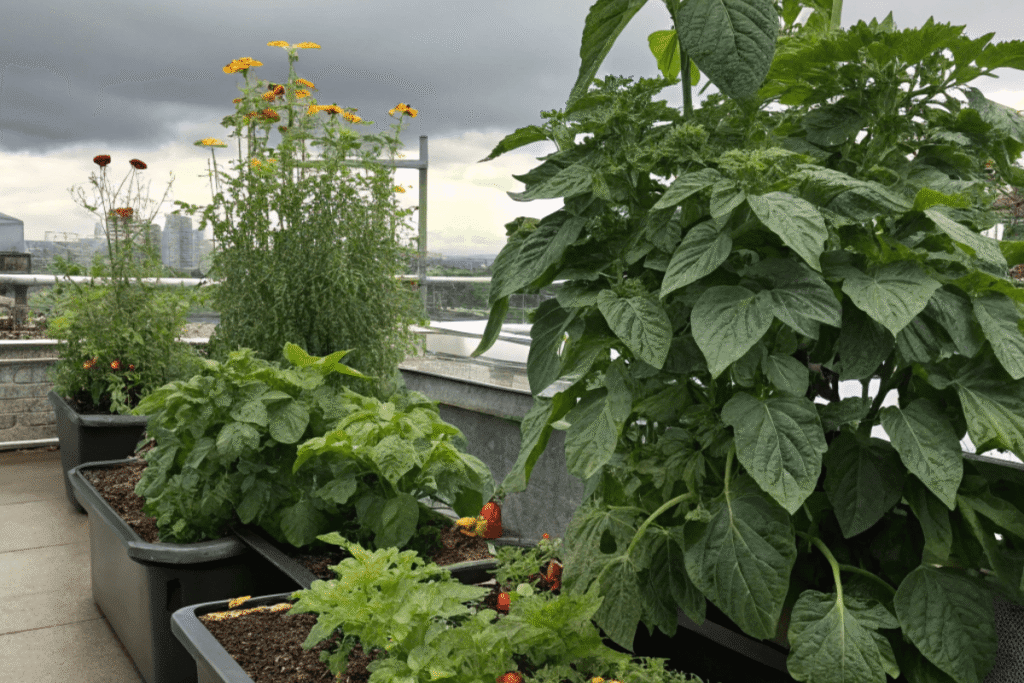
Once you start feeding your container garden with homemade compost, the transformation is nothing short of remarkable. You’ll move beyond just keeping plants alive to watching them truly thrive. Here’s exactly what you can look forward to:
Visibly Healthier Plants The first thing you’ll notice is the color. Instead of a pale or yellowish green, your plants will boast deep, vibrant, emerald-green leaves. This is a direct result of the steady, balanced nitrogen supply from the compost. You’ll also see sturdier, thicker stems that can support the weight of abundant flowers and fruit without needing stakes, a clear sign of a well-nourished and robust plant.
Increased Flowering & Fruiting More energy and better nutrition mean one thing: a bigger show. Plants will channel their vitality into reproduction, resulting in a profusion of blooms. For your vegetable plants and fruit-bearing herbs, this is the ultimate goal. More flowers directly translate into a heavier harvest—more plump tomatoes, more crisp peppers, and more continuous cuts of basil and cilantro. You’ll shift from hoping for a yield to managing an abundant one.
Improved Resilience Compost doesn’t just feed your plants; it fortifies them. Think of it as building a strong immune system. Plants grown in compost-enriched soil are better equipped to handle minor stressors like heat waves or brief dry spells. Furthermore, healthier plants are naturally less susceptible to pest infestations. While a stressed plant sends out “attack me” signals to bugs, a vigorous one can often withstand minor munching without significant damage. The beneficial microbes in the compost also help to suppress soil-borne diseases, creating a healthier root environment.
Water Wisdom If you’re tired of being a slave to your watering can, compost is your answer. Its organic matter acts like a sponge, holding onto moisture much more effectively than depleted potting soil. This means the soil in your pots will stay consistently moist for longer periods after each watering. You’ll find yourself watering less frequently, saving you time and effort, and providing a more stable environment for your plants’ roots.
The Satisfaction Factor Beyond the visible results, there is a profound sense of accomplishment. You are no longer just a consumer; you are a creator in a beautiful, closed-loop system. You’ve taken your coffee grounds, banana peels, and vegetable scraps—items that would otherwise be waste—and transformed them into the most valuable resource a gardener can have. This cycle of turning “waste” into garden gold is incredibly empowering and deeply satisfying, connecting you to the natural cycle of growth and decay right on your balcony or patio.
V. Getting Started: Your First 5 Steps
Feeling inspired? The best part about small-space composting is that you can start today. Don’t overthink it—just follow these five simple steps to kickstart your journey from kitchen scraps to container garden triumph.
1. Choose Your Composter Your first decision is the most exciting one. Look back at the methods in Section II and pick the one that truly fits your life.
- Living in a studio apartment? An Electric Composter or a tidy Bokashi Bucket might be your perfect fit.
- Love the idea of a living ecosystem? A Worm Bin is a fascinating and productive choice.
- Have a small balcony or patio? A Tumbling Composter will handle your scraps with ease. There’s no single “right” answer, only the right one for you. Make your choice and get ready to order or build your new garden ally.
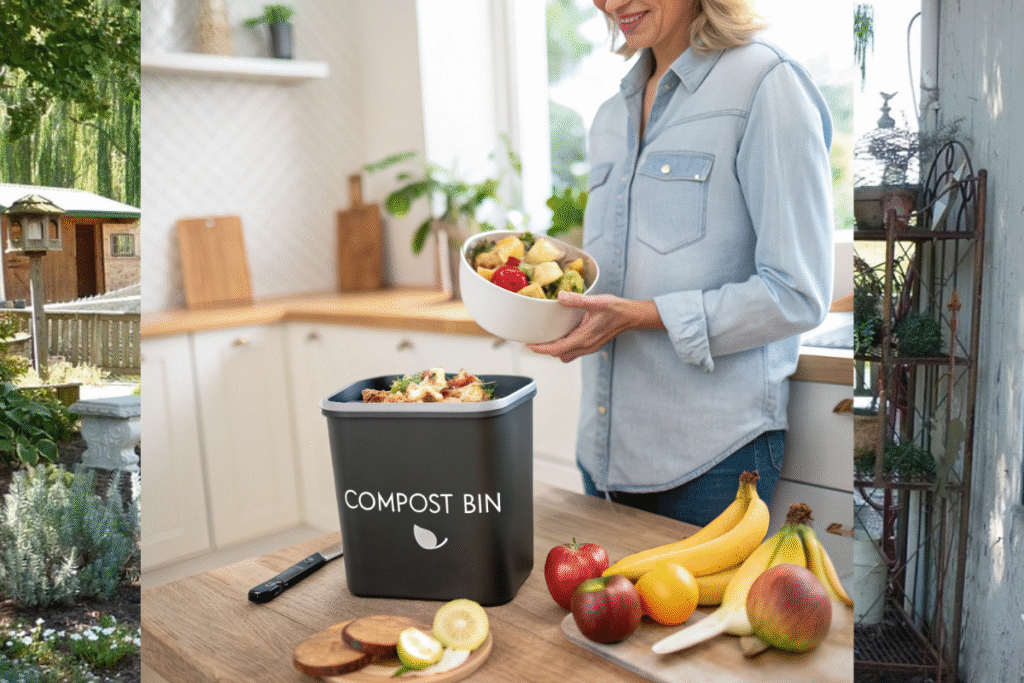
2. Gather Your “Greens & Browns” Composting is like making a lasagna for microbes, and they need a balanced diet. Start collecting your ingredients:
- “Greens” (Nitrogen): This is your wet, juicy material. Think fruit and vegetable scraps, coffee grounds, tea bags, and fresh grass clippings. These provide the protein for the decomposing organisms.
- “Browns” (Carbon): This is the dry, bulky stuff. Collect dried leaves, shredded cardboard (no glossy coatings), shredded black-and-white newspaper, egg cartons, or straw. These provide the energy and create air pockets in your pile. A good rule of thumb is to aim for a rough mix of about 1 part “Greens” to 2 parts “Browns.”
3. Start Your Bin Take the plunge! Set up your chosen composter in its new home. For a worm bin or Bokashi bucket, this might be under the sink or in a utility closet. For a tumbler, it’s on the patio. Now, add your first layers of “greens” and “browns.” If you’re using a Bokashi system, don’t forget the inoculant bran; if you have a worm bin, introduce your red wigglers gently. The journey has officially begun!
4. Mix Your First Batch of Super-Soil In a few weeks (for electric or Bokashi) to a few months (for worms and tumblers), you’ll have finished compost. It will look, feel, and smell like rich, dark earth. Now, it’s time to create magic. Head back to Section III and whip up a batch of the Perfect Potting Mix—1/3 compost, 1/3 coconut coir, 1/3 perlite. As you mix it, you’ll feel the incredible, crumbly texture you’ve created with your own hands.
5. Plant & Observe! Fill a container with your new super-soil. Then, transplant a seedling—perhaps a tomato, a basil plant, or a vibrant marigold. Water it in, place it in a sunny spot, and get ready for the most rewarding part: observation. You will watch, almost in real-time, as that seedling settles into its nutrient-rich home. You’ll see it grow faster, greener, and stronger than any plant you’ve ever grown in a pot before. This is the moment your small-space, big-yield garden comes to life.
Conclusion: From Scraps to Abundance
And so, the cycle is complete. What began as potato peels, coffee grounds, and wilted lettuce has been transformed. Through the simple, revolutionary act of small-space composting, you’ve taken waste and converted it into wealth—the wealth of dark, crumbly, nutrient-dense compost that fuels an incredibly productive container garden. This powerful loop—kitchen waste → nutrient-rich compost → super-productive container garden → delicious food—is one of the most satisfying cycles in nature, and you’ve now made it a central part of your home.
This process proves, once and for all, that space is no longer a limitation. A sprawling backyard is not a prerequisite for being a truly sustainable and successful gardener. Your bounty is no longer measured in acres, but in the vibrant green of a thriving tomato plant on a balcony, the fragrant yield of herbs on a windowsill, and the profound knowledge that you are growing your own food in the most natural way possible.
The journey starts with a single step, and a single banana peel. Start small, be patient with the process, and get ready to harvest the rewards. Your small-space garden—and the planet—will thank you for it.