Introduction: The Problem in the Peel
Take a moment and picture your kitchen trash can after a day of cooking. What’s in there? Coffee grounds, the papery skin of an onion, a banana peel, maybe the carrot tops from last night’s dinner. It seems harmless, right? Just scraps. But multiply that by millions of households, and those scraps become a staggering problem. The average American household throws away nearly 300 pounds of food scraps each year—and that’s not even counting the inedible peels and rinds. Most of this organic waste gets sent to landfills, where it decomposes without oxygen, releasing methane, a potent greenhouse gas that is far more damaging than CO2.
If you live in an apartment, this cycle can feel especially frustrating. You want to do better, but the barriers seem insurmountable. Where would you even put a compost bin? You don’t have a backyard. The thought of smells wafting through your living space or fruit flies staging a takeover is enough to make anyone just toss the apple core and move on. The dream of a zero-waste kitchen can feel like a privilege reserved for people with sprawling gardens and large outdoor compost tumblers.
But what if we told you that the solution isn’t just possible, but perfectly suited for your apartment? We promise: You can compost successfully in a small space. It’s easier than you think, surprisingly odor-free, and an incredibly rewarding practice that transforms your view of “waste.”
Before we dive into the “how,” let’s talk about the “why.” By setting up a simple kitchen composting system, you’re not just reducing landfill waste; you’re creating a powerful, nutrient-rich fertilizer for your houseplants, slashing your overall trash output, and taking a tangible, satisfying step towards a more sustainable lifestyle. Ready to turn your scraps into soil? Let’s begin.
I. Why Bother? The Incredible Benefits of Kitchen Composting
You might be thinking, “It’s just a banana peel… what difference can one person really make?” The truth is, the impact of composting stretches far beyond your kitchen counter. It’s a simple act with a powerful ripple effect, offering rewards for the planet, your home, and your own sense of purpose.
For the Planet: A Direct Line to Healthier Ecosystems
When food scraps decompose in an oxygen-starved landfill, they generate methane, a greenhouse gas over 25 times more potent than carbon dioxide at trapping heat in our atmosphere. By composting, you are actively diverting this organic waste, preventing those emissions and reducing the burden on our overflowing landfill sites.
More than just waste reduction, composting is an act of creation. It closes the food loop, transforming what was once “trash” into a valuable resource. You are participating in a beautiful, circular system: food grows, you consume it, the scraps feed the soil, and that soil grows more food. It’s a tangible way to nurture the cycle of nature right from your apartment.
For Your Home: A Cleaner Kitchen and a Greener Thumb
For apartment dwellers with a penchant for plants, the payoff is immediate. The compost you create is **”black gold”**—a nutrient-rich, living soil amendment that is unparalleled for feeding your houseplants. It improves soil structure, helps retain moisture, and provides a slow-release feast of essential nutrients. No need for store-bought fertilizers! If you don’t have many plants, this precious resource makes a incredibly generous gift for a gardening friend or a donation to a local community garden.
You’ll also notice a dramatic change in your kitchen trash. Food scraps are the heaviest and wettest part of your waste, and they’re what cause most of the foul odors and need for frequent take-outs. By composting, you significantly reduce the volume and smell of your garbage, leading to a cleaner kitchen and fewer trips to the compost chute or dumpster.
For You: The Unseen Joy of Closing the Loop
In a world of complex environmental problems, composting offers a rare and satisfying sense of tangible action. You can see the pile of scraps transform into rich, earthy soil. This isn’t an abstract concept; it’s a hands-on practice that provides a profound sense of accomplishment and agency in the journey towards a zero-waste lifestyle.
Finally, composting fosters a deeper connection to the natural world, even from the heart of a concrete jungle. It’s a daily reminder that we are part of a larger ecosystem—one of growth, decay, and regeneration. Tending to your compost bin becomes a small, mindful ritual that grounds you in the simple, sustainable rhythms of the earth.
II. Composting 101: The Basic Science in a Nutshell
The word “composting” might sound like a complex scientific endeavor, but I promise you, it’s as simple as following a basic recipe. Think of yourself as a chef, and your compost bin is your slow cooker. You just need to add the right ingredients in the right proportions.
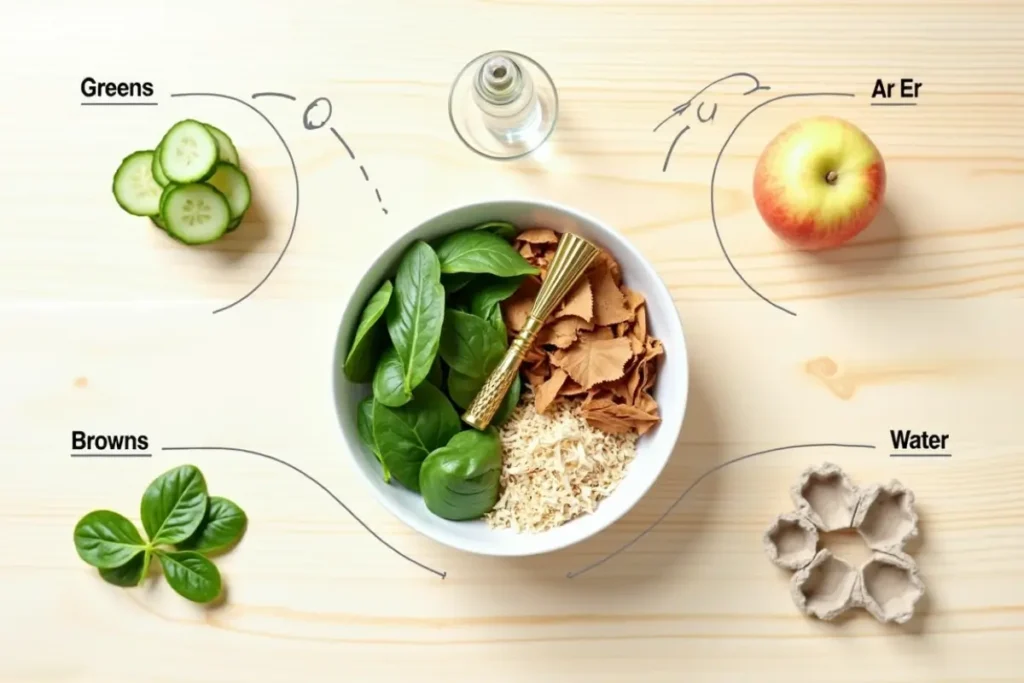
The Simple Recipe: Compost = Greens + Browns + Air + Water.
At its heart, composting is just the controlled decomposition of organic matter. This process is fueled by tiny microorganisms (bacteria and fungi) that happily eat your waste. Your job is simply to keep these tiny workers happy by providing a balanced diet and a comfortable home.
Let’s meet the key ingredients:
Greens (The Nitrogen Powerhouse) These are your kitchen’s wet, often colorful scraps. They provide the protein-rich fuel (nitrogen) that the microorganisms need to grow and multiply rapidly.
- What they are: Fruit & vegetable peels, coffee grounds, tea bags (staples removed), fresh grass clippings, and plant trimmings.
- Pro Tip: Even though they’re white, crushed eggshells are considered a “Green” in this context. They add valuable calcium but break down slowly.
Browns (The Carbon Crusaders) These are the dry, woody materials. They are the carbon source, providing energy for the microbes and, most importantly, creating a fluffy structure that allows air to flow. Browns are the unsung heroes of odor control—they soak up excess moisture and prevent your bin from becoming a slimy, smelly mess.
- What they are: Shredded paper (non-glossy), cardboard (torn into small pieces), dried leaves, sawdust from untreated wood, paper towels/napkins (without chemical cleaners), and straw.
The Golden Ratio: A Simple Rule of Thumb So, how much of each do you need? The magic formula for a healthy, odor-free compost system is roughly 2 parts Browns to 1 part Greens (by volume).
Don’t worry; you don’t need to be precise with a measuring cup! Just think in layers:
- Start with a thick base of Browns (like a 3-inch layer).
- Add your layer of Greens (about half as thick).
- Always cover your food scraps with a “blanket” of Browns.
This “browns blanket” is your best defense against fruit flies and unpleasant smells. If your compost ever starts to smell or look too wet, your tiny workers are telling you they need more Browns. Just add a handful, stir if you can, and you’re back on track!
With this simple recipe in mind, you’re ready to choose the perfect “pot” for your composting kitchen.
III. Choosing Your Apartment-Friendly Composting System
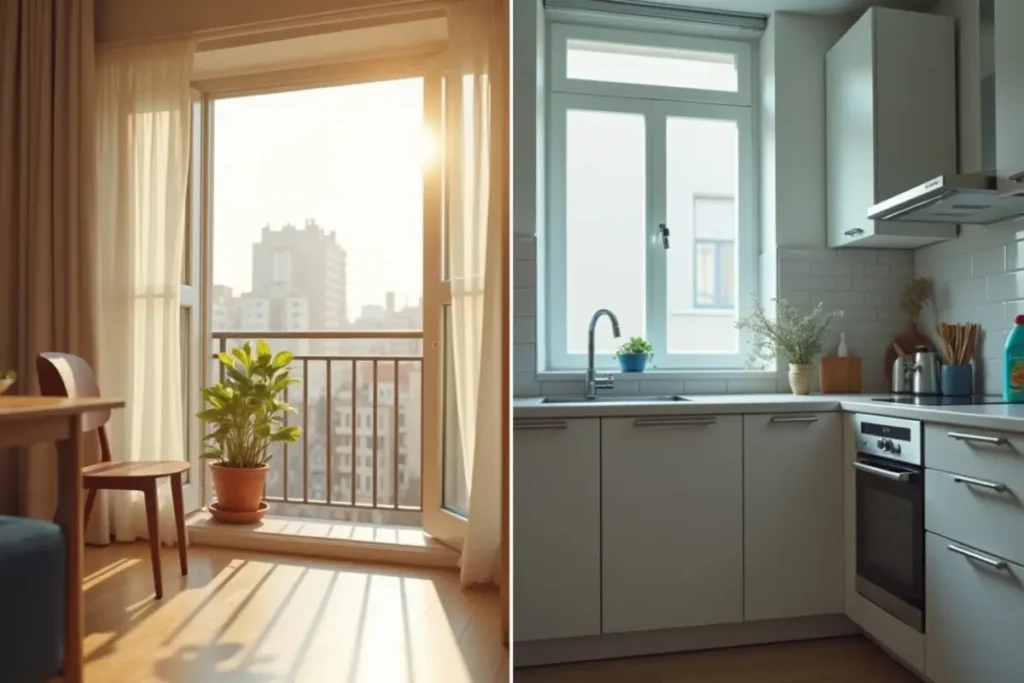
Now that you understand the basic recipe, it’s time to choose your “kitchen appliance” for composting. The best system is the one that fits your lifestyle, space, and comfort level. The great news is that there’s a perfect method for every apartment, whether you have a sunny balcony or just a spare cabinet under the sink.
A. The Indoor Composter (No Balcony Needed)
These systems are designed to work entirely inside your home, making them ideal for any apartment.
1. Electric Composter (e.g., Lomi, FoodCycler)
- How it works: This is the high-tech, “set-it-and-forget-it” option. You add your scraps, press a button, and the machine uses grinding, heat, and aeration to dehydrate and break them down into a dry, soil-like fertilizer in just a few hours.
- Pros:
- Extremely Fast: Turns scraps into fertilizer overnight.
- Very Low Odor & Pest-Proof: Fully sealed and active, it doesn’t attract bugs.
- Beginner-Friendly: Incredibly simple to use with almost no learning curve.
- Cons:
- Higher Upfront Cost: The most expensive option on the list.
- Uses Electricity: It adds a small, but ongoing, energy cost.
- Produces “Pre-Compost”: The output is technically a soil amendment that is best mixed into an outdoor compost pile or soil, as it can be too nutrient-rich for plants on its own.
2. Bokashi Bin (Fermentation Method)
- How it works: This Japanese method uses anaerobic fermentation. You layer all your food scraps in a special airtight bucket and sprinkle them with a Bokashi bran inoculant, which is packed with beneficial microbes. It pickles your waste, breaking it down in about two weeks.
- Pros:
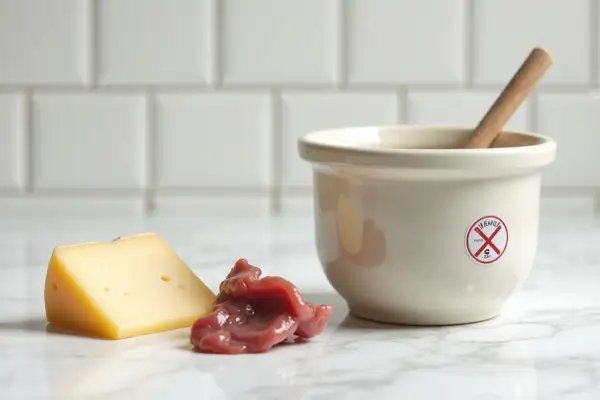
- Handles All Food Waste: This is the only indoor method that can process meat, dairy, bones, and cooked foods.
- Small & Compact: Fits easily under a sink or in a closet.
- Fast Pre-Processing: The fermentation stage is quick.
- Cons:
- Requires Buying Bran: You need a continuous supply of the Bokashi bran inoculant.
- Two-Stage Process: The fermented pre-compost must be buried in soil (e.g., in a community garden or a large planter) to complete its breakdown into finished compost.
3. Worm Bin (Vermicomposting)
- How it works: You harness the power of Red Wiggler worms! These are not your average garden earthworms. You house them in a multi-tiered bin, and they happily eat their way through your kitchen scraps, producing two incredible products: vermicompost (worm castings) and “worm tea” (a nutrient-packed liquid fertilizer).
- Pros:
- Highly Efficient & Productive: Worms are composting powerhouses.
- Produces Premium Fertilizer: Worm castings are considered the gold standard of compost.
- Fascinating & Educational: A wonderful way to connect with nature indoors.
- Cons:
- Requires Worm Management: You need to monitor their environment—they are sensitive to temperature, moisture, and acidity.
- Slight Learning Curve: There’s a bit more setup and ongoing attention needed to keep your worm herd happy.
B. The Balcony Composter (If You Have Outdoor Space)
If you have a balcony or patio, you can use larger, more traditional systems.
- Tumbling Composter: A barrel-shaped bin that sits on a stand. Its main advantage is that it’s easy to turn by cranking a handle, which aerates the compost and significantly speeds up the decomposition process.
- Stackable (Hungry Bin) Composter: A vertical system with stacked trays. As the worms finish composting in one tray, you add another to the top. It’s space-efficient and an excellent, larger-scale home for a worm farm.
Comparison Table: Find Your Perfect Match
| Method | Best For | Cost | Speed | Effort | Odor Potential |
| Electric Composter | Tech-lovers, busy folks, absolute beginners | High ($) | Very Fast (Hours) | Very Low | Very Low |
| Bokashi Bin | Those who want to compost all food scraps, including meat/dairy | Medium ($$) | Fast (2 Weeks for fermentation) | Medium | Low (sweet, pickled smell) |
| Worm Bin | Plant lovers, hands-on gardeners, the curious | Low-Media ($$) | Steady (2-3 Months) | Medium | Low (earthy smell) |
| Balcony Composter | Anyone with outdoor space, larger households | Medium ($$) | Moderate (1-4 Months) | Low-Medium | Low (when balanced) |
The bottom line: Your choice depends on your priorities. Want the ultimate convenience and have the budget? Go electric. Want to compost everything and have a place to bury the results? Bokashi is for you. Love the idea of a living system and premium plant food? Welcome to the wonderful world of worms
IV. Your Step-by-Step Guide to Getting Started
You’ve chosen your method and you’re ready to dive in. This is where the theory becomes practice, and it’s much simpler than it seems. Follow these five easy steps, and you’ll be a composting pro in no time.
Step 1: Pick Your Method & Bin. This is your foundational decision. Reflect on the options from the previous section and choose the system that best fits your life. Did the electric composter’s speed speak to you? Are you intrigued by the Bokashi method’s ability to handle all food waste? Or are you ready to become a worm whisperer? Once you’ve decided, acquire your chosen bin and any necessary supplies (like Bokashi bran or worms).
Step 2: Set Up Your Station. Now, give your composter a home.
- Location is key: Choose a convenient spot. For indoor bins, this could be under the kitchen sink, in a spare cabinet, or in a utility closet. If you’re using a balcony composter, find a level spot that’s not in direct, all-day sun.
- The “Scraps Caddy”: This is your daily workhorse. Grab a small, lidded container (a repurposed mason jar, a ceramic crock, or a small stainless steel bin) to keep on your countertop. This makes collecting scraps throughout the day easy and tidy, so you’re not making multiple trips to the main bin.
Step 3: The First Layer. A great compost system starts with a strong foundation. Before you add a single food scrap, begin with a thick layer (about 3-4 inches) of “Browns” in the bottom of your bin. This base layer of shredded cardboard, paper, or dried leaves will absorb excess moisture from the start and ensure good airflow from day one.
Step 4: Feed Your Composter. This is the ongoing ritual! As your countertop caddy fills up, empty it into your main composter.
- Add Greens: Dump your fruit and vegetable peels, coffee grounds, and other “Greens” into the bin.
- The Crucial “Browns Blanket”: This is the single most important tip for odor-free composting. Always, always cover your new layer of Greens with a handful or two of Browns. Think of it as tucking your food scraps into a dry, cozy bed. This simple act prevents smells and deters fruit flies by creating a physical barrier.
Step 5: Maintenance. A little care keeps your system running smoothly. The maintenance required depends on your chosen method:
- For Standard Bins (like tumblers or stackable composters): Provide occasional stirring or aerating with a small trowel or fork every week or two to introduce oxygen, which speeds up decomposition.
- For Bokashi Bins: You’ll need to drain the liquid (the potent “Bokashi tea”) from the spigot every few days and use a tool to press down the scraps to remove air pockets after each addition.
- For Worm Bins: Your duty is to monitor moisture and food levels. The bin should feel like a wrung-out sponge. If it’s too wet, add more Browns. If it’s too dry, mist with water. Ensure you are not overfeeding your worms.
And that’s it! You’re now officially composting. By following these steps, you are well on your way to turning your kitchen scraps into a valuable resource.
V. Troubleshooting Common Apartment Composting Fears
Let’s be honest: even with the best intentions, a few worries might be holding you back. This is completely normal! The good news is that every common fear has a simple, effective solution. Let’s demystify them right now.
“But Won’t It Smell?”
This is the number one concern, and here’s the secret: a properly maintained compost system should not smell bad. A healthy, balanced bin will have a pleasant, earthy aroma, like a forest floor after rain.
If you encounter an unpleasant smell (like rot, sourness, or ammonia), it’s your compost’s way of sending an S.O.S. signal. The cause is almost always an imbalance.
- The Solution: Add More Browns!
- A sour or rotten smell means it’s too wet and there’s not enough air. Browns are your dry, carbon-rich materials that soak up moisture and create air pockets.
- An ammonia smell means there’s too much nitrogen (Greens).
- The fix for both is the same: Immediately add a generous amount of shredded cardboard, dried leaves, or paper. Stir it in if you can. The smell should resolve within a day or two.
“What About Fruit Flies?”
These tiny flies are attracted to exposed, fermenting fruit scraps. They are more of a nuisance than a catastrophe, and they are entirely preventable.
- The Solution: Your Browns Blanket and a Tight Lid.
- Never Leave Food Uncovered: Remember that crucial step from our guide? Always bury your “Greens” under a “blanket” of “Browns.” This physical barrier is your first and best defense, hiding the tempting scraps from view.
- Secure Your Counter Caddy: Ensure the lid on your kitchen scrap collection pail seals tightly. Empty it every day or two before scraps begin to break down.
- Create a Vinegar Trap: If a few appear, create a simple trap with a small jar containing apple cider vinegar and a drop of dish soap. Cover the top with plastic wrap and poke small holes. They’ll be attracted in and won’t be able to get out.
“I Don’t Have a Use for the Finished Compost!”
You’ve successfully created “black gold,” but your studio apartment full of succulents can’t possibly use it all. What now? Your precious compost is a hot commodity!
- The Solution: Share the Wealth!
- Gift It: Offer it to a friend, family member, or neighbor who gardens. It’s a incredibly thoughtful and valuable gift.
- Donate It: Many community gardens, school gardens, or local urban farms will happily accept donations of finished compost.
- Feed Public Green Spaces: (A note on guerrilla gardening) You can quietly sprinkle it around the base of trees or in neglected flower beds in your neighborhood to give them a nutrient boost.
- Top-Dress Houseplants: Even if you only have a few plants, a thin layer of compost sprinkled on top of the soil will slowly feed them with every watering.
By addressing these fears head-on, you can compost with confidence, knowing you have the tools to handle any minor hiccups that come your way.
VI. Beyond the Bin: What to Do With Your Finished Compost
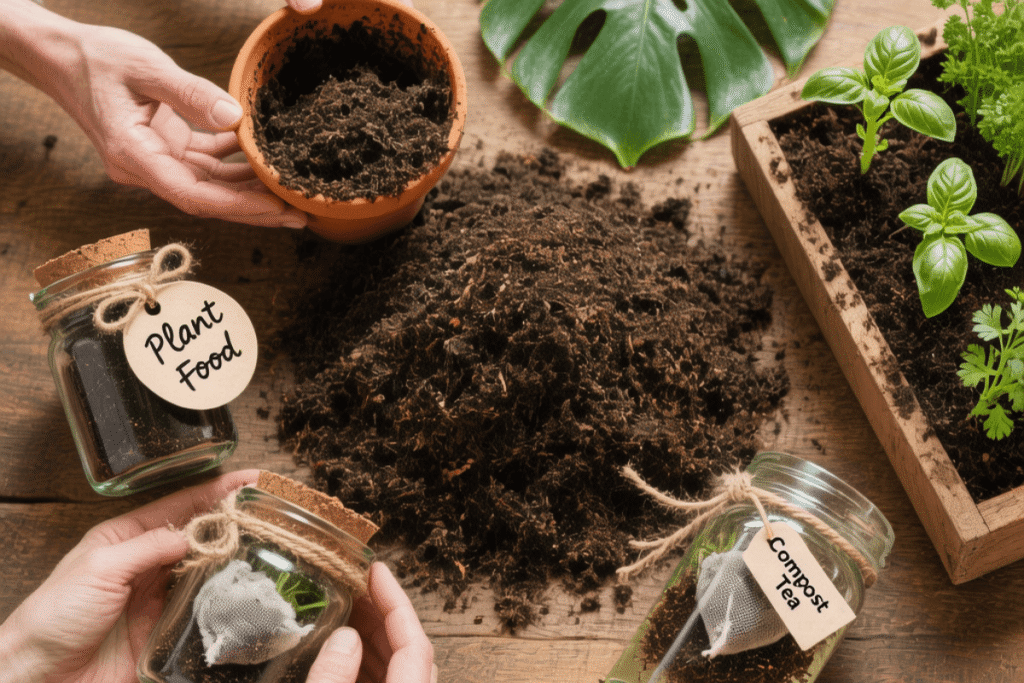
After weeks of patiently feeding and tending to your compost system, you’ll be rewarded with the gardener’s equivalent of striking gold: finished compost. This is the moment where your food scraps complete their incredible journey and become a powerful resource. Let’s explore how to harvest and use your “black gold.”
The “Harvest”: Recognizing Finished Compost
How do you know when it’s ready? Finished compost is:
- Dark and Crumbly: It looks like rich, dark soil and has a fine, crumbly texture. You shouldn’t be able to recognize the original food scraps (except for the occasional eggshell bit).
- Earthy-Smelling: It has a pleasant, fresh, forest-floor scent. If it smells sour or rotten, it needs more time to break down.
- Cool to the Touch: The intense microbial activity that generates heat has finished, and the compost is at ambient temperature.
For worm bins, you’ll harvest the dark, crumbly castings, carefully separating them from the worms. For electric composters, you’ll collect the cool, dry output. For Bokashi, you’ll harvest the fermented pre-compost.
Using Your “Black Gold”
Your finished compost is a superfood for plants. Here’s how to put it to work, even in an apartment:
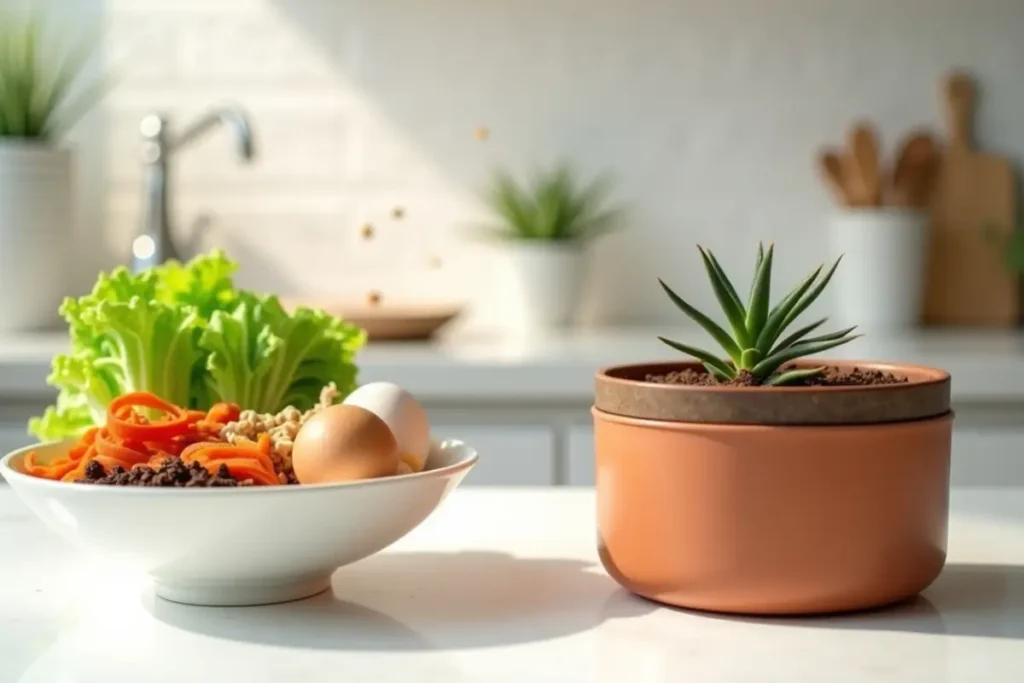
1. Top-Dress Your Houseplants This is the simplest way to use compost indoors. Gently scratch a thin layer (about half an inch) of compost into the top of your houseplant’s soil. Every time you water, nutrients will slowly seep down to the roots, giving your plants a long-lasting, healthy boost without the risk of burning them with harsh chemical fertilizers.
2. Create Compost Tea for Watering For a quick, liquid nutrient boost, you can make a simple compost tea. Place a handful of finished compost in a bucket or jar of water and let it steep for 24-48 hours. Strain out the solids, and use the resulting dark liquid to water your plants. It’s like a cup of herbal tea for your greenery, delivering beneficial microbes and nutrients directly to the roots.
3. Donate to a Community Garden or Local Farm You may find you produce more compost than your plant collection can handle. This is a fantastic “problem” to have! Your nutrient-rich compost is a valuable gift.
- Share with a neighbor who gardens.
- Contact a local community garden or urban farm; they are often thrilled to accept donations.
- Offer it up on a local Buy-Nothing group or neighborhood forum—you’ll be surprised how many gardeners will happily take it off your hands.
4. (For Bokashi) Bury the Pre-Compost Remember, Bokashi pre-compost is fermented, not finished. It needs to complete its decomposition in soil. If you have access to a community garden plot, bury it in a trench. If not, you can finish the process in a large, deep planter on your balcony. Bury the pre-compost, cover it with at least 8 inches of soil, and in 2-4 weeks, it will have transformed into incredible compost right in the pot, ready for planting.
Conclusion: Your Kitchen, Your Mini-Ecosystem
Look at that banana peel or handful of coffee grounds now. What was once destined for the landfill, a contributor to a global problem, has been redefined. Through the simple, intentional act of composting, you’ve transformed it into the very building block of new life. You’ve closed the loop, right on your countertop or balcony, turning a linear system of waste into a circular ecosystem of renewal.
This journey from seeing scraps as waste to valuing them as a resource is a profound shift. It’s a practice that connects your daily kitchen routine to the ancient, grounding cycles of the earth.
Remember, starting small is not just okay—it’s perfect. You don’t need a fancy setup or to be an expert from day one. Every apple core you redirect from the trash is a victory. Every handful of Browns you add is a step toward a healthier system.
The power to make a tangible difference is literally at your fingertips. So, choose your method, set up your bin, and take that first step today. Your plants—and the planet—will thank you.