Introduction
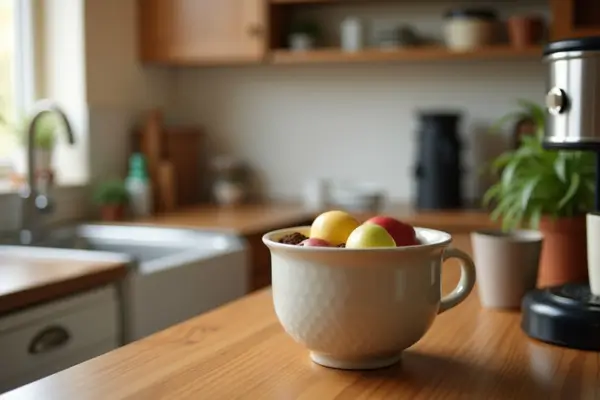
You finish chopping vegetables for dinner, and you’re left with a pile of potato peels, onion skins, and coffee grounds. For a moment, you pause, feeling that familiar twinge of guilt as you scrape them into the trash. You want to live more sustainably, to reduce your footprint, but you live in an apartment. Your outdoor space is a modest balcony, not a sprawling backyard with room for a compost pile. So, the scraps go in the bin, destined for the landfill, and with them, a little bit of your eco-conscience.
Sound familiar?
For too long, the word “composting” has been tangled with unglamorous images: a fenced-off heap in the corner of a yard, buzzing with flies and giving off a distinct… earthy aroma. It’s time to shatter that misconception. Modern composting is a world away from that. It can be clean, remarkably odor-free, and—dare we say—downright stylish.
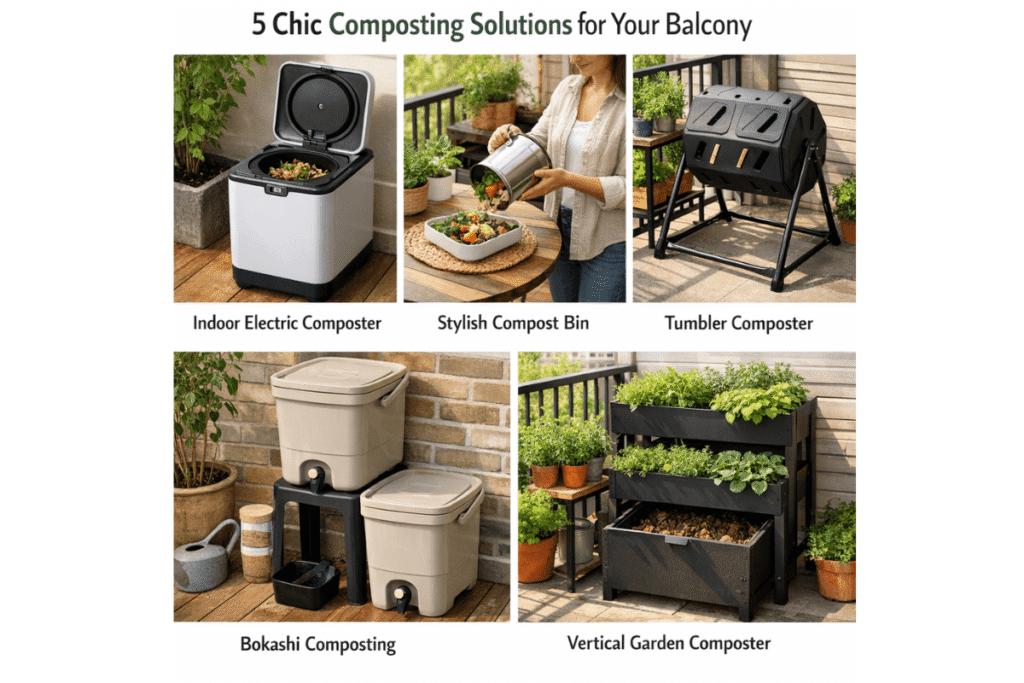
The good news is that you don’t need a single square foot of garden soil to make a difference. The solution is literally steps away, right outside your sliding glass door. This article is your guide to moving beyond the pile. We’ve curated five chic and practical composting solutions specifically designed for balcony living.
By the end of this read, you’ll be equipped to choose the perfect system to transform your kitchen scraps into “black gold” for your plants, slashing your landfill waste and nurturing your own little green oasis—no backyard required.
Section 1: Why Balcony Composting is a Game-Changer (The “Why” Before the “How”)
So, why go to the trouble of composting on your balcony? The benefits extend far beyond just feeling good about being green. This simple act is a powerful shift that transforms your relationship with waste and your urban environment.
Turn Waste into Wealth Imagine your coffee grounds, apple cores, and vegetable peels no longer being “trash,” but a valuable resource. Composting is nature’s ultimate recycling program, turning your kitchen scraps into a dark, crumbly, nutrient-rich superfood for your plants. This “black gold” is a potent, completely free fertilizer that will supercharge your houseplants, herb gardens, and window boxes, leading to lusher leaves and more vibrant blooms than any store-bought product can promise.
Dramatically Reduce Landfill Waste The environmental impact is staggering. Did you know that up to 30% of what ends up in the average household trash can is compostable organic material? That’s nearly one-third of our waste stream that doesn’t need to be trucked to a landfill, where it decomposes without oxygen, releasing methane—a potent greenhouse gas. By composting on your balcony, you are actively pulling the plug on this cycle, making a direct and measurable difference with every scrap you save.
The Urban Gardener’s Secret Weapon For those of us nurturing plants in a concrete jungle, good soil is everything. Container plants quickly deplete the nutrients in their limited soil. Compost is the ultimate remedy, continually replenishing the earth and improving soil structure. It’s the secret weapon that allows urban gardeners to create a thriving, productive green space in the smallest of areas, from a few pots of basil and tomatoes to a balcony bursting with flowers.
It’s Easier (and Cleaner) Than You Think If you’re hesitating because you’re picturing a smelly, pest-ridden mess, we’re here to put those fears to rest. Modern balcony composting systems are designed to be sealed, efficient, and odor-neutral. When done correctly—by balancing your “greens” (food scraps) and “browns” (like dried leaves or shredded paper)—the process is an aerobic one that should smell like nothing more than a forest floor. With the right system, you can say goodbye to fruit flies and hello to a clean, simple routine that fits seamlessly into your life.
Section 2: Finding Your Perfect Match: A Quick Guide
Now that you’re excited about the benefits, let’s find the system that truly fits your lifestyle. Not all composters are created equal, and the “best” one is entirely personal. Before we dive into the five chic solutions, take a quick moment to consider these four key factors. Asking yourself these questions will make your choice infinitely easier.
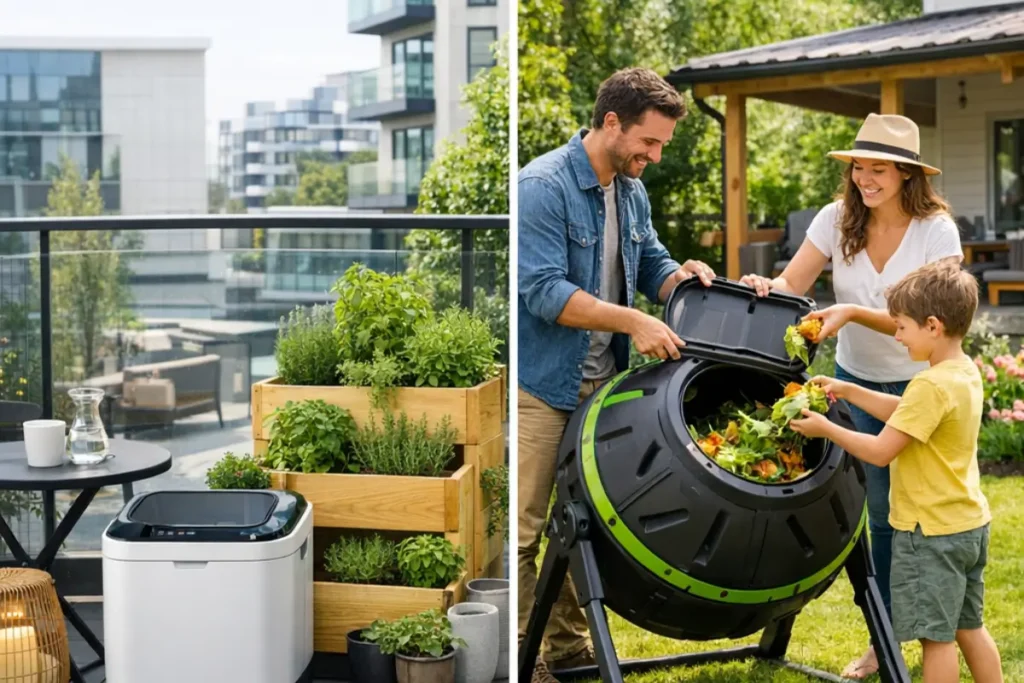
Space: The Balcony Real Estate Test Be honest with yourself about how much room you’re willing to dedicate. Are you working with a cozy Juliet balcony, a standard-sized space shared with a chair and table, or a sprawling terrace? Your available square footage will quickly narrow down your options, from a compact countertop electric composter to a more substantial tumbler.
Effort & Attention: The “Set It and Forget It” Spectrum How hands-on do you want to be? Some methods, like worm farming (vermicomposting), require regular feeding and monitoring, making them a rewarding hobby for the engaged gardener. Others, like the Bokashi bin or electric composter, involve simple, periodic steps. And some, like tumblers, need a bit of manual turning. Decide whether you want a low-maintenance appliance or an interactive project.
Aesthetics: The Style Quotient Your balcony is an extension of your home. How important is the look of your composter? If you’ve curated a minimalist, modern space, a sleek electric unit or a discreet tumbler in a neutral color might be essential. If you love a DIY feel, a beautifully labeled ceramic crock could be a charming addition. The good news is that “functional” no longer means “ugly.”
Output: What’s Your End Goal? Consider what you want to get out of the process. Are you dreaming of rich, solid compost to mix into your plant pots? Or are you looking for a powerful liquid fertilizer (like “compost tea”) to feed your plants? Some systems produce one, the other, or even both. Your gardening goals will directly influence which system serves you best.
By keeping these four factors in mind—Space, Effort, Aesthetics, and Output—you’ll be perfectly prepared to evaluate the five solutions we’re about to explore and find your ideal zero-waste partner.
Section 3: The 5 Chic Composting Solutions
Solution 1: The Sleek Tumbler
What it is: The tumbler is the classic “compost bin” reimagined for the modern home. It consists of a sealed, robust drum—often dual-chambered—mounted on a sturdy metal frame for easy rotation.
The Chic Factor: Gone are the days of rickety, open-bottomed bins. Today’s tumblers are designed with aesthetics in mind, featuring a modern, barrel-like silhouette and clean lines. They typically come in neutral, earthy colors like forest green, matte black, or terracotta brown, allowing them to blend seamlessly into your balcony decor rather than sticking out as an eyesore.
How it Works: The process is wonderfully straightforward. You add your kitchen scraps (“greens”) along with carbon-rich “browns” like shredded paper, cardboard, or dried leaves. The magic happens when you give the drum a few spins every couple of days. This tumbling action mixes the ingredients and incorporates oxygen, which is essential for fast, odor-free decomposition. The sealed environment retains heat and moisture, speeding up the process and keeping pests out.
Best For: The Sleek Tumbler is perfect for those who want the satisfaction of creating traditional compost and don’t mind incorporating a small, physical task into their weekly routine. It’s ideal for a household that generates a moderate amount of scraps.
Pros & Cons:
- Pros:
- Fast Processing: The enclosed, aerated design significantly speeds up decomposition compared to stationary piles.
- Contained & Pest-Proof: As a fully sealed unit, it effectively deters flies and rodents.
- Easy to Harvest: Simply open a door and scoop out the finished compost from the bottom—no digging required.
- Cons:
- Can Be Bulky: It requires a dedicated corner of your balcony and isn’t suitable for very small spaces.
- Limited Capacity: You can’t add new scraps once the drum is full; you must wait for that batch to finish processing.
Solution 2: The Elegant Electric Composter (The Countertop Powerhouse)
What it is: Welcome to the future of composting. An electric composter is a high-tech, countertop appliance that uses a combination of grinding, heat, and aeration to rapidly break down food scraps. It’s not composting in the traditional, microbial sense, but a accelerated process of dehydration and pulverization that creates a valuable soil amendment in a matter of hours.
The Chic Factor: These devices are designed for the modern kitchen, not the garden shed. With their sleek, minimalist designs, quiet hum, and footprint similar to a slow cooker, brands like Lomi and Vitamix FoodCycler look right at home alongside your other premium appliances. They are the undeniable choice for those who prioritize aesthetics and seamless integration into a contemporary living space.
How it Works: The ultimate in convenience: you collect your food scraps (often including items like small bones and compostable bioplastics, depending on the model), add them to the unit, and press a button. Over the next 4-8 hours, the machine works its magic, using low heat to dehydrate the waste and internal blades to grind it into a fine, dry, and odorless powder. Once the cycle is complete, you’re left with a nutrient-rich “pre-compost” that’s ready to be mixed directly into your plant soil.
Best For: This is the perfect solution for busy urbanites, tech enthusiasts, and anyone with a strong aversion to the potential mess or odors of traditional composting. Its ability to live and operate indoors makes it ideal for very small balconies or homes with no outdoor space at all.
Pros & Cons:
- Pros:
- Incredibly Fast: Transforms scraps into usable material in a single day.
- Odorless & Pest-Free: The closed-loop system prevents any smells or bugs.
- Extremely Easy to Use: Truly a “set it and forget it” solution with minimal learning curve.
- Cons:
- Higher Upfront Cost: A significant investment compared to other methods.
- Uses Electricity: It consumes a modest amount of energy to operate.
- Produces a “Pre-Compost”: The output is not biologically active compost; it needs to be integrated into soil to complete its transformation and provide maximum benefit to plants.
Solution 3: The Subtle Worm Farm (Vermicomposting)
What it is: Meet the most productive and efficient workers for your balcony garden: worms. Vermicomposting is a method that uses specific species of worms, typically red wigglers, in a tiered bin system to consume your organic waste. Their digestive process creates two incredibly powerful products: vermicompost (worm castings) and a liquid fertilizer known as “compost tea.”
The Chic Factor: Forget the image of a rustic wooden box. Modern worm farms are engineering marvels of sleek, stackable trays designed with urban aesthetics in mind. They often resemble a stylish, multi-tiered storage box or a piece of modern furniture, finished in dark, neutral colors that look tidy and intentional in any balcony corner.
How it Works: The system operates on a simple, vertical migration principle. You start with worms in the bottom tray, buried in a moist bedding of shredded newspaper or coconut coir. As you add food scraps to this tray, the worms eat them. Once the first tray is full, you add a new tray on top, filled with fresh bedding and food. The worms naturally migrate upwards towards the new food source, leaving behind their castings—a dark, granular, soil-like material—in the lower tray. This makes harvesting easy: you simply remove the bottom tray of finished compost while the worms are busy working in the trays above. A spigot at the base allows you to drain the nutrient-rich “compost tea” that accumulates.
Best For: The dedicated plant parent who wants the absolute highest quality fertilizer for their plants. This method is for someone who doesn’t mind being a mini-livestock farmer and finds joy in tending to a living ecosystem.
Pros & Cons:
- Pros:
- Superior Output: Produces vermicompost and compost tea, widely considered the most potent and plant-beneficial fertilizers available.
- Highly Efficient: Works continuously and can process a surprising amount of waste for its compact size.
- Quiet & Low-Energy: Runs entirely on natural processes.
- Cons:
- Living System to Manage: Requires care to maintain the right moisture, temperature, and food balance for the worms’ health.
- Environmental Sensitivity: Worms are sensitive to temperature extremes; the bin may need protection from hot sun or freezing cold.
- Slight Learning Curve: Requires a bit more initial research to set up and balance correctly.
Solution 4: The Space-Saving Bokashi Bin
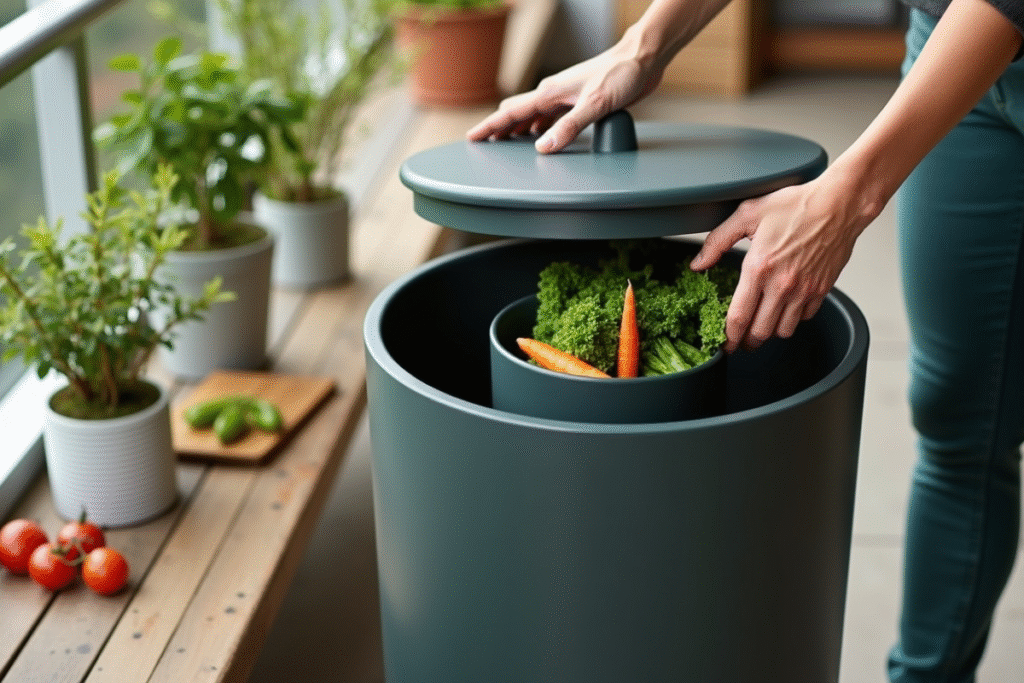
What it is: The Bokashi bin is a unique and powerful indoor composting system that relies on anaerobic fermentation, not decomposition. By using a special inoculated bran, it effectively “pickles” your food waste, allowing you to compost virtually everything from your kitchen—including meat, dairy, bones, and cooked foods that are typically no-gos for other methods.
The Chic Factor: The beauty of the Bokashi bin lies in its ultimate discretion and simplicity. It is typically a sleek, white, food-grade bucket with an airtight lid and a spigot at the base. Its minimalist and clean design allows it to be tucked neatly into a corner of your kitchen, a closet, or under the sink, completely hidden from view until you need it.
How it Works: The process is methodical and simple. You collect your food scraps in the sealed bin, and with every inch or two of waste, you sprinkle a handful of Bokashi bran, which is infused with beneficial microbes. You then press the contents down to remove as much air as possible before sealing the lid tightly. This creates an oxygen-free environment where the microbes can ferment the waste. After about two weeks of this pickling process, the pre-compost is not finished, but “pre-digested.” The final step is to bury this fermented material in a soil bin, a garden bed, or a community compost pile, where it will break down completely within a few more weeks.
Best For: This method is ideal for those with the absolute minimum of balcony or indoor space, and for anyone frustrated by the limitations of what can go into other composters. It’s perfect for the cook who wants a truly comprehensive solution for all kitchen waste.
Pros & Cons:
- Pros:
- Accepts All Scraps: The only balcony method that confidently handles meat, dairy, and oils.
- Extremely Compact: Takes up minimal space and is completely odor-free when sealed properly.
- Fast Fermentation: The initial pickling stage is very quick, getting waste out of your kitchen rapidly.
- Cons:
- Two-Stage Process: Requires a subsequent burial step to complete the breakdown, which requires having a plan for the fermented waste.
- Liquid Management: The potent, nutrient-rich “Bokashi tea” that drains from the spigot must be collected weekly to prevent pressure buildup and can be used as a fertilizer (when diluted) or poured down the drain.
Solution 5: The DIY Chic Jar (Composting with Beneficial Bacteria)
What it is: For those who love a hands-on, minimalist approach, the DIY Chic Jar is the perfect entry point into the world of composting. This method simplifies the science of breakdown into a single, beautiful container. It uses a carbon-rich substrate—such as Bokashi bran, spent coffee grounds, or even garden soil—to inoculate small amounts of food waste with beneficial microbes, all within a sealed jar.
The Chic Factor: This is where form and function meet beautifully. The entire system is your choice of vessel, offering ultimate aesthetic flexibility. A large, clear glass jar with a clasp lid becomes a living science experiment on your countertop. A stylish ceramic crock with a wooden lid can look like a rustic kitchen staple. You can label it, tie a ribbon around it, or let its simple elegance speak for itself, making it as much a decor piece as a functional composter.
How it Works: The process is wonderfully straightforward. Start with a layer of your chosen substrate at the bottom of your jar. As you generate small amounts of kitchen scraps (think a handful of vegetable peels or coffee grounds), chop them finely and add them to the jar, immediately covering them with another thin layer of substrate to seal in the waste and introduce more microbes. Press the contents down to eliminate air pockets, seal the lid tightly, and store it in a cool, dark place. Over several weeks, the microbes will work to break down the contents, resulting in a pre-compost that can be buried in a houseplant’s soil or added to a larger outdoor compost system.
Best For: The solo dweller, the DIY enthusiast, or anyone feeling curious but hesitant about composting. It’s the ideal method for someone who wants to test the waters with zero financial investment and enjoys a visible, tangible process.
Pros & Cons:
- Pros:
- Extremely Low Cost: Can be assembled for free using a repurposed jar and common household materials.
- Perfect for Minimal Waste: Excellent for individuals or couples who generate very little food scrap.
- Visually Appealing & Educational: A beautiful and fascinating way to observe the decomposition process up close.
- Cons:
- Very Small Scale: Only practical for processing tiny amounts of waste at a time.
- Can Be Slower: Lacks the aeration and volume of larger systems, slowing down the breakdown.
- Requires Careful Balance: Too much moisture or too many scraps without enough substrate can lead to unpleasant odors or mold.

Section 4: Getting Started: Your First 5 Steps
You’ve met the contenders and considered your criteria. Now, it’s time to take the plunge! Transitioning to a composting lifestyle is simple when you break it down into these five easy steps.
1. Choose Your Champion Look back over the five solutions and listen to your gut. Which one sparked the most excitement? Which best fits your space, style, and commitment level? Remember, there’s no single “right” answer—only the perfect system for you. Whether it’s the high-tech speed of an electric composter or the simple charm of a DIY jar, making that initial choice is the most important step.
2. Gather Your Gear Before your system arrives, you’ll need a way to collect scraps in your kitchen. A small, stylish countertop caddy with a charcoal filter is a game-changer. It keeps everything tidy and odor-free while you accumulate a day’s worth of peels and grounds. This small habit makes the entire process seamless.
3. Learn the “Greens & Browns” This is the only bit of composting science you need to know, and it’s simple! For a healthy, odor-free compost system, you need a balance of two things:
- Greens: Your nitrogen-rich kitchen scraps (fruit and vegetable peels, coffee grounds, fresh plant clippings). These provide moisture and protein.
- Browns: Your carbon-rich materials (shredded paper, cardboard, dried leaves, wood shavings). These provide structure and absorb excess moisture, preventing smells. A good rule of thumb is to add a handful of “browns” for every handful of “greens” you add to your system (note: this does not apply to the Bokashi or Electric methods).
4. Set Up Your System Find the perfect spot for your new composter on your balcony. Consider the climate: most systems prefer a location out of direct, hot sun and protected from heavy rain. A shaded corner is often ideal. Ensure it’s in a place that’s easy for you to access regularly, making it a natural part of your routine.
5. Start Feeding! You’re all set! Begin by adding small amounts of scraps to your new system. Don’t overwhelm it on the first day. The key to success is consistency—getting into a simple routine of feeding your composter and performing any minor maintenance, like turning a tumbler or draining a Bokashi bin. Before you know it, you’ll be a balcony composting pro, turning your waste into wealth with ease.
Conclusion
As we’ve seen, the dream of composting is no longer confined to those with a backyard. Composting on your balcony is not only entirely possible, but it can also be a simple, stylish, and incredibly rewarding addition to your urban lifestyle. You have the power to transform your kitchen waste to reduce your environmental footprint and create a powerful, natural elixir for your plants.
You are now equipped with all the knowledge you need to make a significant impact, right from your own home. This isn’t about achieving perfection; it’s about taking a simple, positive step towards a more sustainable and green-thumbed life.
Now, we’d love to hear from you!
- Which of these five chic composting solutions are you most excited to try? Share your choice in the comments below and tell us why!
- Know a fellow city gardener or eco-conscious friend? Tag them in the comments—because a greener balcony is even better when shared!
- Ready to put your new “black gold” to work? Loved this guide? Click here to read our next article: The Urban Oasis: 10 Easiest Herbs to Grow on Your Balcony.